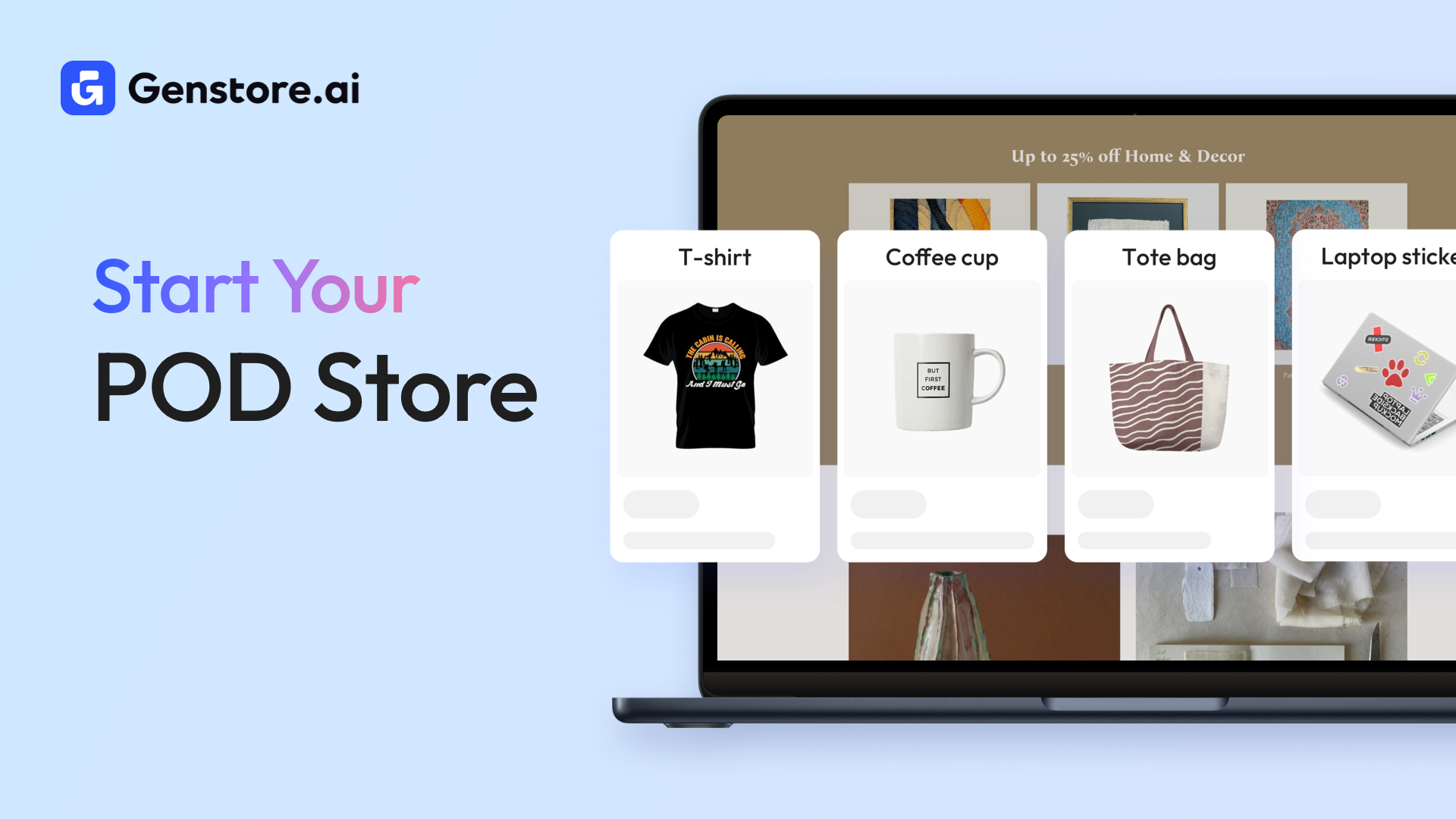
Print-on-demand (POD) services give entrepreneurs and small businesses a way to sell custom items without handling the tough stuff, like product development and inventory management. Paired with an online store builder, launching a POD business is an affordable, low-risk way to monetize your creative ideas.
In this guide, you’ll learn how to start a print-on-demand business in concrete steps. You’ll discover the pros and cons of this unique business model, tips to find your niche, and ways to build your product catalog.
What’s a Print-On-Demand Business?
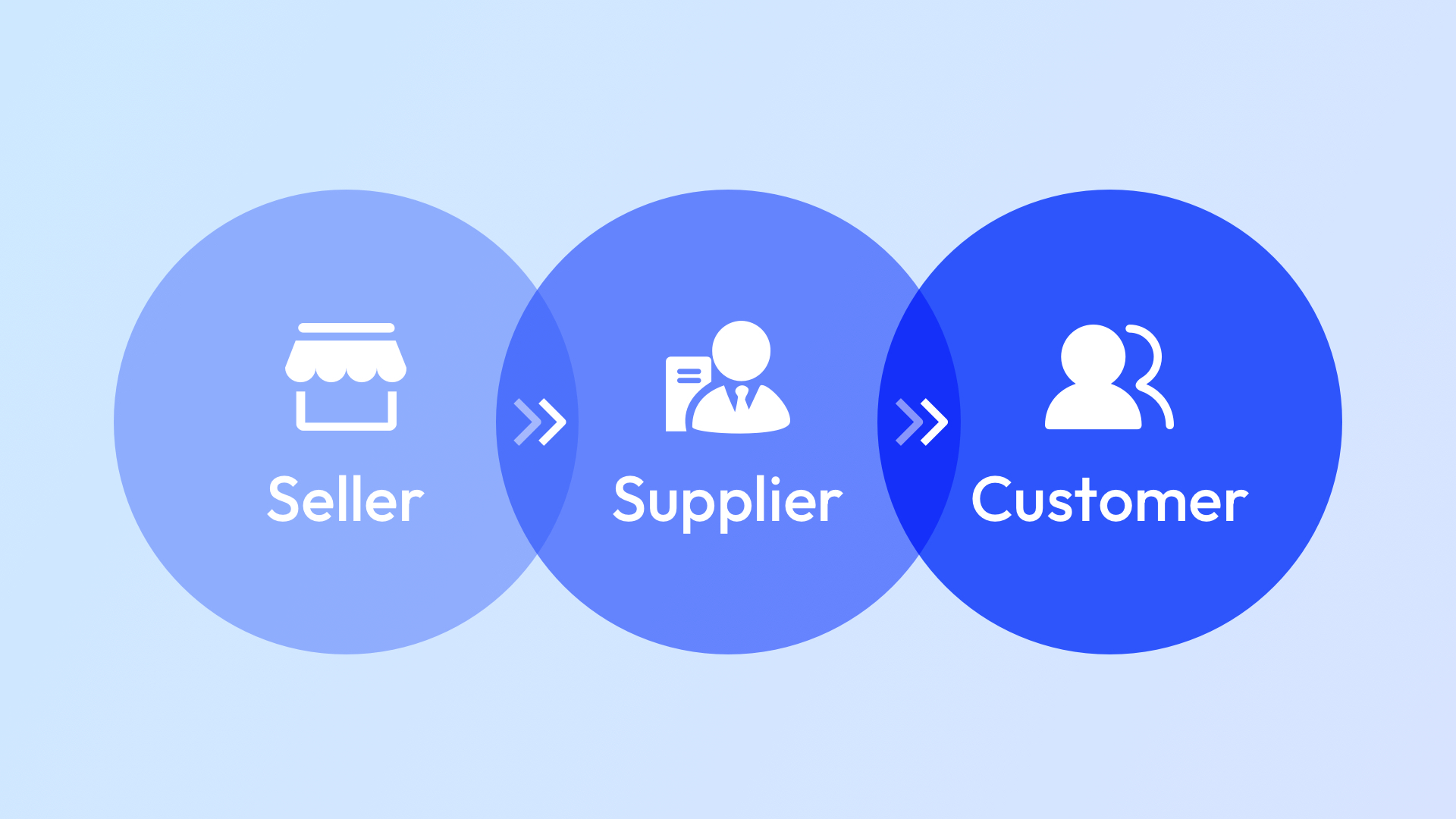
The print-on-demand business model lets sellers design custom products, and once a customer orders an item, the supplier creates and ships it. This lets entrepreneurs sell tailored merchandise without dealing with manufacturing, storage, and fulfillment themselves.
This system is similar to traditional dropshipping, where sellers choose from a range of premade products, then let the supplier handle fulfillment. Print-on-demand services follow the same concept but take it a step further by allowing personalization. By adding brand-aligned flair to each listing, sellers can fill their catalog with unique products instead of the same merchandise sold in other online stores.
It works like this:
- You use an e-commerce platform to create an online store.
- You choose POD suppliers and select products like coffee mugs and T-shirts.
- You commission or create designs and provide them to the supplier.
- A customer buys a product, and the supplier prints the item once the order goes through.
- The supplier ships your custom product, and you pocket the proceeds.
How To Choose a Niche and Products for Your Print-On-Demand Store
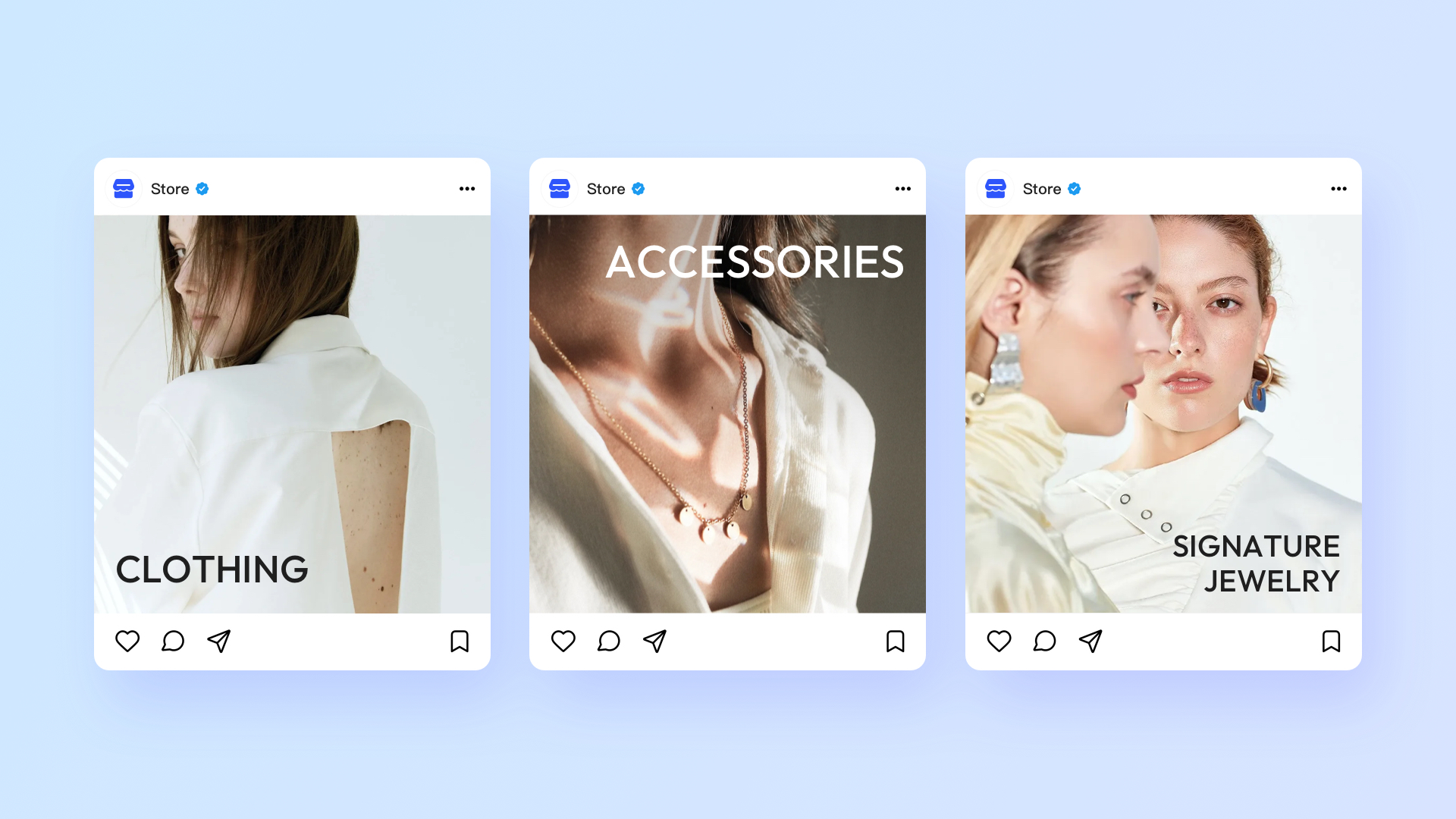
E-commerce is a competitive industry. Your best chance of success lies in finding a niche you understand and love so you can dig in deep and offer something truly unique. Here are some key factors to consider if you want to learn how to do print-on-demand right.
Conduct Market Analysis
You could try spinning up an online store and see what sticks, but backing your efforts with market research helps you use your time wisely and hit that sweet spot faster.
Take your print-on-demand business ideas, and explore demand, saturation, and popular keywords to get a sense of their potential. If one looks like a viable option, investigate trending products and profit margins to come up with catalog ideas.
Be Intentional With Your Design
Create designs that match what your target audience likes while speaking your brand’s voice at the same time. Define your ideal customer, then analyze color palettes, item choices, and typography that fit their interests. This helps you stand out instead of becoming just another generic e-commerce store.
Brainstorm Product Ideas
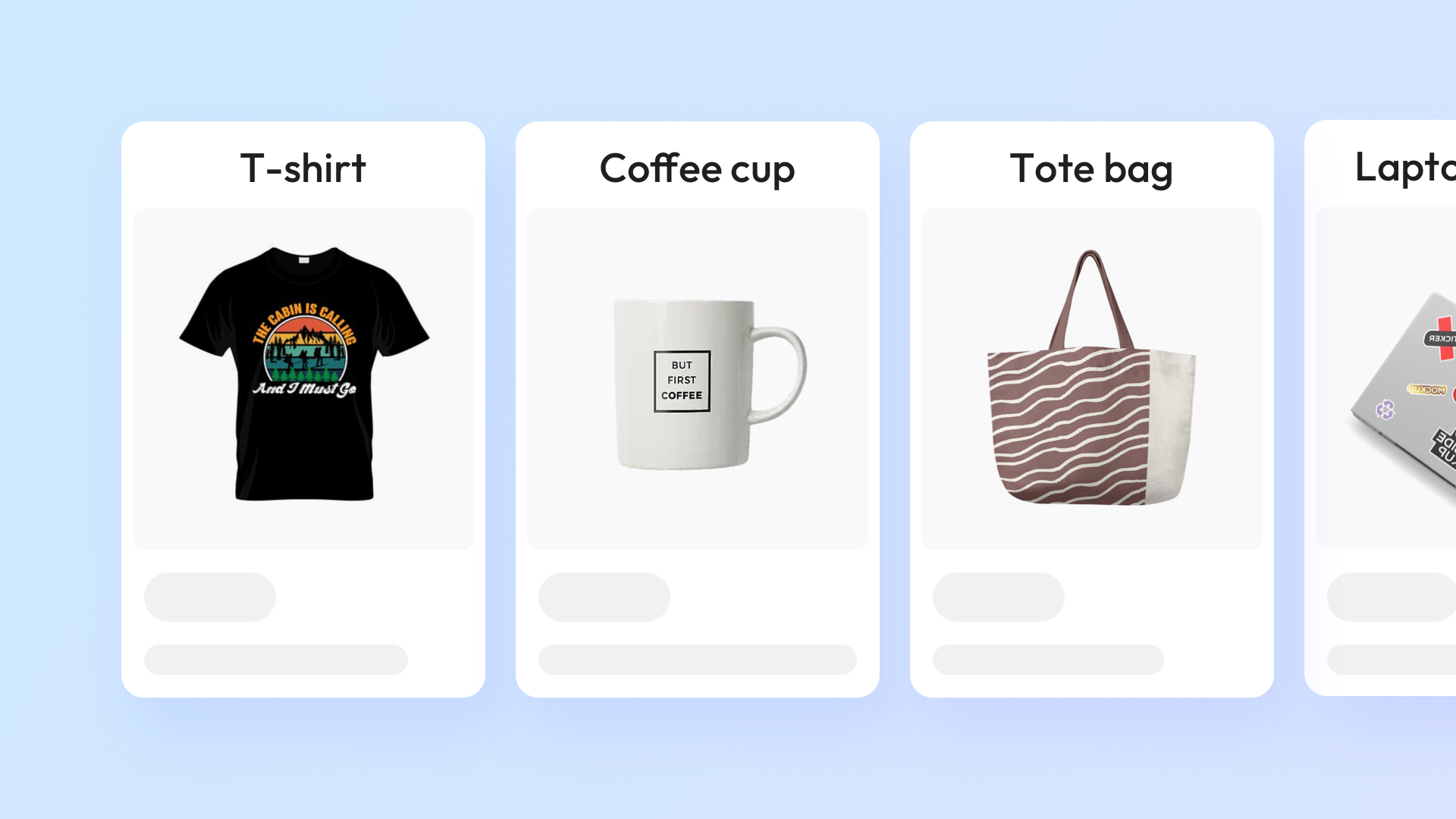
POD products come in a wide range of categories, letting sellers pick items that fit their image and niche. Here are a few popular picks:
- Apparel like T-shirts, hoodies, and hats
- Accessories like phone cases, laptop sleeves, and tote bags
- Home goods like pillows, blankets, and wall art
- Drinkware like mugs and water bottles
Focus on trending products that truly fit your market, not just what looks appealing to you. For instance, simple plastic phone cases are a good general choice, but a fitness brand might find them too fragile for their active-minded audience. This business might want to offer sweatbands and tote bags instead.
How To Start a Print-on-Demand Business: Step-by-Step Guide

Turning ideas into reality is a lot easier than it used to be thanks to AI-driven platforms like Genstore. Here’s everything you need to do to start a print-on-demand business today.
Find Your Niche
Consider your interests and expertise, and hunt for a niche that’s not oversaturated. Try starting out with a general category, like travel, then go deeper. From here, you could dive into a highly unique topic you could really make a dent in—like van-dwelling remote work.
Partner With an E-commerce Platform
Unless you opt for custom website design and development, chances are you’re working with an e-commerce platform to simplify operations. Your choice can make or break your business—you’ll be using it to handle most of the tasks involved in running a POD store. Consider options with integrated AI tools, reasonable pricing plans, and responsive customer support.
Look for solutions that offer integrations with trusted POD services. In 2024, two of the biggest POD services, Printful and Printify, joined forces to create FYUL. Genstore fully integrates with FYUL, giving you access to a huge array of customizable products.
Already have a Shopify store? Migrate it to Genstore in one click, and start managing your e-commerce store with the help of on-call AI Agents.
Choose POD Suppliers
Shipping and production costs are the main drivers of (or obstacles to) profitability. Look for providers with reasonable fees to keep your profits high. It’s also beneficial to find suppliers with a good track record of speedy delivery. This keeps your operations smooth and your customers happy.
Don’t forget to vet suppliers for print quality so you can confidently put your brand on their products. Try designing a product and ordering a small batch to see how it looks in person.
You’re relying entirely on this third party and don’t control the production process, so if there’s ever a quality issue, you can’t just adjust printer settings or upgrade to higher-quality materials. While you can always change providers, it’s best to secure a reliable partner the first time.
Build Your Product Catalog
Identify product trends, and brainstorm custom items that your customers will love. Continuing with the remote working van-dweller example, this could include:
- Mousepads customized with photographs of famous roadtrip scenes
- Laptop stickers of classic vans, like the VW bus or Chevrolet G-Series
- Insulated coffee mugs with remote work terms and phrases
Once you’ve decided what to sell, commission or create designs that suit your brand, and make sure they fit on your products comfortably.
Set Prices
Time to set prices. Start by reviewing competitor sites to put some solid data behind your numbers. Don’t forget to incorporate taxes, shipping, and production costs so you don’t undershoot your target profit margin.
Launch Your Online Store
Once your product catalog is locked and loaded, you’re ready to go live. Use your e-commerce platform’s website builder to launch your website. This typically takes a couple days of time and effort (and maybe some advice from a friendly web developer), but it doesn’t have to. With Genstore’s team of AI Agents, it only takes two minutes to publish a brand-new online store.
Put Together a Marketing Strategy
Put together a plan to get your name out there and drive traffic. First, find out where your target audience spends time online. Review existing customer and social media analytics if you have them, and check out competitor channels to see where they thrive.
Start tailoring your approach for your audience and chosen network. For our van-lifer example, you might pick Instagram as your main channel, as it’s a popular place for travel and lifestyle content. Then, produce content that fits, like day-in-the-life videos and carousel posts of landscape images.
Measure Progress and Adjust
Regularly review conversion analytics to find out which products regularly sell and which ones you can prune. Store metrics can also help you explore user behavior and optimize your website experience. For instance, if you have a lot of abandoned shopping carts, you might set up automated reminder emails.
Pros and Cons of Running a POD Business
There’s a lot to like about the POD business model, but there are also drawbacks to consider. Here are the biggest advantages and disadvantages to weigh.
Pros of POD stores
Let’s take a look at the benefits of POD stores:
- Minimal start-up costs: With POD services, you don’t pay for manufacturing, storage, and fulfillment. If you’re creating designs yourself, you can get started with POD for the cost of building a website.
- No inventory to manage: Since your custom products are made to order, you don’t have to worry about footing warehousing fees or handling the unsold goods gathering dust in your garage.
- Built-in scaling: Since inventory and order fulfillment are off your hands, you can relax if you get a sudden influx of customers. Plus, expanding your product line is as easy as shopping from a catalog.
Cons of POD stores
Now, let’s review the potential drawbacks of a POD business:
- Higher production costs: Creating products on demand can be more expensive than manufacturing at scale, depending on the item type. This increased production cost can hurt your profit margins.
- Fierce competition: POD services typically focus on merchandise like apparel and accessories, which can be crowded markets. That means you’ll have to work hard to stand out.
- Reliance on third-party suppliers: Outsourcing production and order fulfillment is convenient, but the trade-off is limited control over quality and shipping speed.
Start Your POD Business With Genstore
POD services let you launch an online store without the hassle of manual e-commerce approaches. By outsourcing production and inventory management, anyone can sell custom products without spending weeks on logistics and product sourcing. If you’re looking to quickly set up shop and manage your business from one platform, give Genstore a try.
Genstore provides everything you need to create a polished POD store that moves units. Choose from millions of products from integrated providers and automatically create product listings by explaining your needs in a simple text prompt. Launch in minutes, then monitor and adjust your tactics with detailed analytics. Genstore is simple and approachable—our full suite of dedicated AI Agents supports you every step of the way.
Try Genstore’s best-in-class AI store builder today to see how seamless a POD business can be.