The use of AI in e-commerce isn’t new. For years, online retailers have relied on this technology to offer personalized product recommendations and set up always-on customer support chatbots. But agentic commerce, a new type of AI technology, is primed to transform the online shopping ecosystem as we know it.
AI Agents take action autonomously instead of having to be prompted for each individual task. With consumers finding the exact products they need, e-commerce business owners can multiply their success while drastically reducing their workload.
In this guide, we’ll dig into how agentic commerce works, its core benefits and challenges for online retailers, and how to integrate it into your workflow.
What’s Agentic Commerce?
Agentic commerce refers to AI-powered agents making decisions on behalf of users. It marks a major transition from generative AI, which requires constant input from the user. For example, if a business owner uses ChatGPT to write a marketing campaign, getting decent results often means a lengthy back-and-forth conversation guided by the user.
But with agentic AI, once the business owner defines their goals and preferences, the system uses planning, reasoning, and task execution skills to create and launch ads. Instead of just providing a few dashboard insights for further review, AI can browse different marketplaces, analyze competitor pricing, and customize promotions.
Although discussion around agentic commerce sometimes touches on consumer shopping experiences, the primary value is with online merchants. E-commerce business owners can use AI Agents to take care of all kinds of jobs, like designing, building, and updating an online shopping website from start to finish.
As an emerging technology, agentic commerce hasn’t quite made a deep impact on online shopping journeys, but it’s something for business owners to start learning how to operate and leverage before it’s too late.
How Agentic Commerce Is Transforming Online Retail
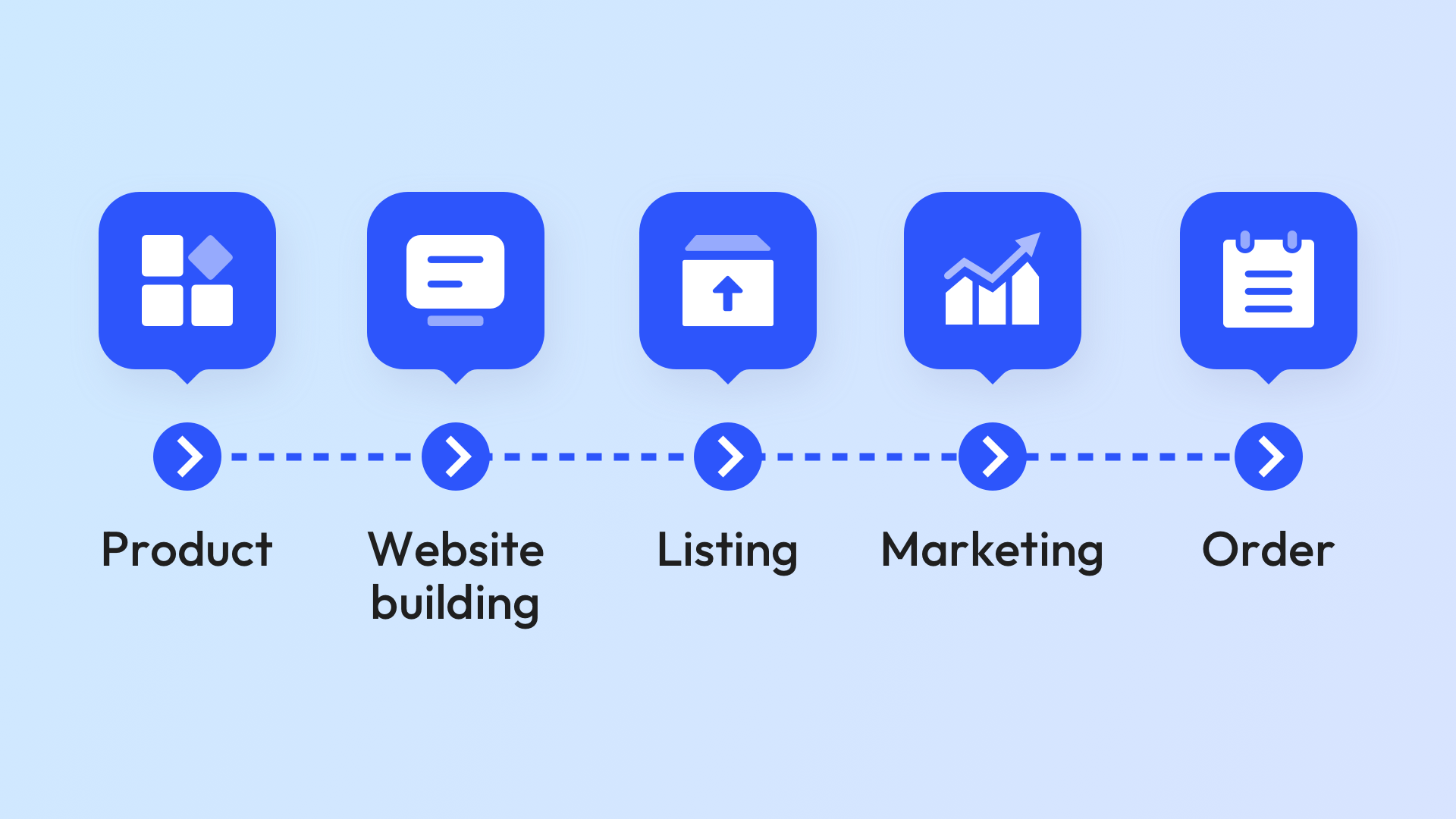
Curious about using AI for retail? Here are a few of its powerful capabilities.
Autonomy
Instead of getting advice for one-off decisions, an AI Agent acts autonomously with minimal input from humans. It can choose suppliers, set prices, and launch campaigns, all without waiting for approval.
Data Integration
AI Agents rely on multi-modal retail data, including catalogs, reviews, and inventory, to make decisions. Agentive commerce AI also has the skills to make the most of that information with sophisticated data analysis techniques.
For example, if you’re looking to change up your offerings, have an AI Agent review product descriptions and inventory information to expand your offerings automatically. Rest easy knowing the decisions are based on every available piece of data.
Cross-Platform Execution
AI Agents aren’t just floating around in a digital cloud, far removed from the nitty-gritty of everyday e-commerce operations. They’re on the ground searching Amazon and Alibaba for the latest trending products, keeping up with Google’s ever-changing search algorithm to optimize your SEO, and even negotiating bargains with suppliers.
Traditional AI vs. Agentic Commerce

Agentic commerce is a paradigm shift for the e-commerce business model, not just generative AI 2.0. Let’s take a look at some differences between the two.
Reactive vs. Proactive AI
Generative AI can give you ideas for products your customers might like. But agentic AI can find the highest-quality versions at the best prices, make secure purchase transactions, and create new product listings for your website automatically. Agentic e-commerce replaces human-guided assistance with independent decision-making, carrying out decisions on the user’s behalf.
Single-Task Execution vs. Comprehensive Automation
The advent of generative AI brought us intelligent systems with the ability to handle an astonishing array of tasks and use cases—but only one by one. Agentic commerce chains multiple steps together, forming a complete end-to-end e-commerce solution.
Assisted Shopping vs. Autonomous Purchasing
For consumers, shopping with traditional AI tools meant having long back-and-forth conversations about products and preferences. Agentic commerce is like getting a personal assistant for the price of a few cups of coffee. For example, Google’s AI bot Gemini is now able to call stores to see whether items are in stock or on sale. Once it has the answer, you’ll get a text or email with the results.
Pros and Cons of Using AI in E-Commerce
Agentic commerce is powerful, but there are potential pitfalls to consider, too. Let’s dive into the advantages and disadvantages of this tech.
Pros
- Affordability: Launching an AI e-commerce business is much friendlier on the wallet than traditional routes like hiring freelance designers or marketing professionals. Depending on your needs, you may be able to use agentic commerce for the price of a monthly streaming subscription.
- Quality results: Website builders are no longer just for basic portfolios and “About Me” pages. The rise of AI lets users build e-commerce websites that rival the work of experienced pros.
- Reduced workload: AI commerce tools dramatically cut down on the work required by traditional workflows. The innovation of text-based user interfaces means executing complex tasks is as easy as writing simple prompts.
Cons
- Security and compliance risks: Since agentic commerce AI has access to a lot of information, users have to diligently avoid exposing sensitive data. Thankfully, the e-commerce world is building safeguards to keep pace, like tokenization technology for secure autonomous purchase transactions.
- Consumer trust: Because high-performing AI is so new, some consumers are wary of its impact and functionality. Clear communication and transparency are key in maintaining customers’ trust in your store.
- Integration complexity: Agentic commerce requires linking the AI to your data, connected platforms, and APIs so it can actually execute the decisions it makes. This multi-step process can potentially make integration more complicated.
How To Prepare for the Agentic Commerce Revolution
While agentic commerce adoption isn’t yet widespread, getting ready before your competitors have mastered it will keep you from falling behind. Here’s how to get ahead.
Optimize Your Product Data
Review your product listings to make sure they’re machine-readable. Each product’s data should be well-structured and correctly categorized with no missing attributes. Descriptions should explain every feature clearly and comprehensively.
Updating Your Marketing Approach
As more consumers start using AI Agents to shop online, e-commerce business owners will need to cater to both human and AI customers. Keep tabs on the latest techniques for creating marketing assets and promotional campaigns that are attractive to both people and machines. For instance, use generative AI to customize ads to each shopper, and use conversational language that AI easily understands.
Choosing the Right E-Commerce AI Solution
AI-powered commerce platforms vary in capabilities, from tools that automate marketing campaigns to those that process and manage inventory fulfillment. Open your store with a solution like Genstore that offers an intuitive conversation-based interface for generating a breathtaking website in seconds.
Upgrade Your E-Commerce Store with Genstore
Agentic commerce combines autonomous decision-making, task execution, and data integration to create a powerful hands-off approach to online retailing. While it’s still evolving, you can start using agentic commerce today with Genstore’s AI-powered store builder. Our platform unlocks a full behind-the-scenes crew that automates the key components of building an e-commerce website without sacrificing quality or control.
Design a beautiful storefront with instantly recognizable branding—just describe what you’re envisioning in plain English. When you’re ready for takeoff, talk to the Launch Agent to make sure everything works together seamlessly. Once you’re live, continuously optimize with human-readable analytical insights and compelling promotional campaigns to boost your conversion rate.
If you already have an e-commerce store but you’re ready to enhance it with the latest AI features, migrate everything to Genstore with a single click.
Sign up for Genstore today to supercharge your e-commerce business and reduce your workload at the same time.
FAQ
How Is AI Changing E-Commerce?
AI is transforming e-commerce for both shoppers and business owners by allowing them to automate just about everything. Consumers get a low-cost personal shopper, while entrepreneurs get an expert partner that handles everything from design to marketing.
Do I Need Technical Skills to Leverage Agentic Commerce?
No technical skills are needed to use agentic commerce. Use AI e-commerce tools by describing your needs in a simple text prompt, just like talking to ChatGPT.
What’s the Difference Between Agentic AI and Generative AI?
Generative AI produces assets such as product descriptions and design elements by reacting to user prompts. Agentic AI takes on full projects, creating the overall strategy and executing every step autonomously.