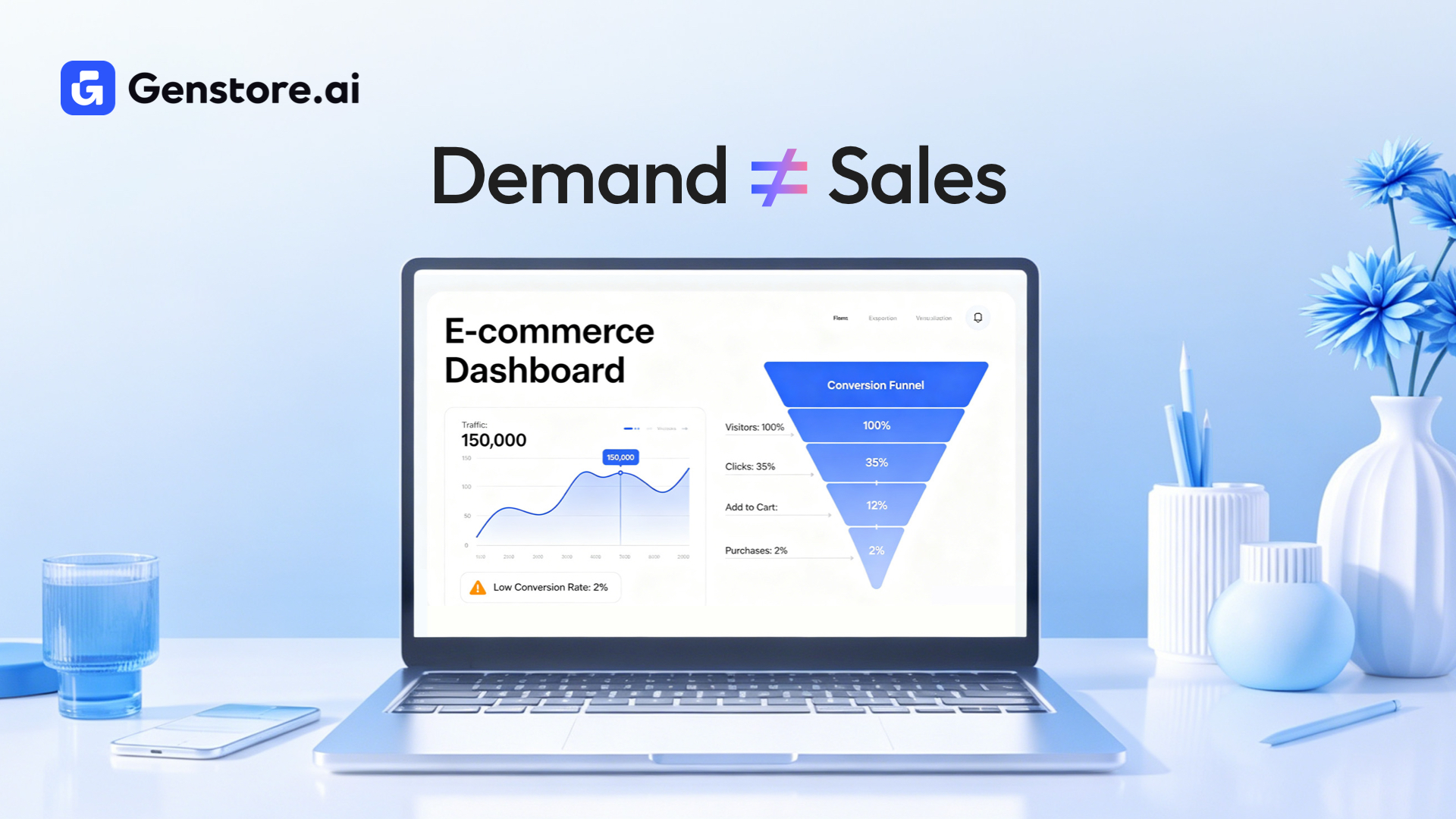
One of the most frustrating moments in ecommerce is this: the data looks right, the product has demand, traffic is coming in, but sales are flat.
This is more common than most sellers expect. According to a 2025 report by Statista, global ecommerce conversion rates still average between 2% and 3%, meaning the vast majority of traffic never turns into customers.
So the issue is not demand. It is conversion.
Most sellers spend time validating whether people want a product. Very few spend time validating whether people will actually buy it from their store.
That gap is where most products fail.
Demand Does Not Equal Purchase Intent
Demand signals are easy to find. Search volume, trending videos, and viral content all point to interest.
But interest is not the same as intent.
Google’s recent consumer insights report shows that over 60% of shoppers go through multiple touchpoints before making a purchase decision.
That means even if someone is searching or engaging with content, they are still evaluating options. The product alone is not enough to close the sale.
This is where most dropshipping setups fall short. They validate the existence of demand, but ignore the conditions required for conversion.
The Real Problem: Missing Conversion Conditions

A product converts when three layers align: pricing logic, trust signals, and context clarity.
If any one of these is weak, demand leaks out.
First is pricing logic. According to Shopify’s 2024 commerce report, price transparency and perceived value are among the top factors influencing purchase decisions.
If the price feels arbitrary or disconnected from value, users hesitate. Even a small mismatch can drop conversion significantly.
Second is trust. A Baymard Institute study in 2025 found that 17% of users abandon purchases due to lack of trust in the site.
No reviews, unclear shipping, or generic product pages all signal risk.
Third is context. Nielsen data shows that shoppers are far more likely to convert when they clearly understand how a product fits into their life.
If the use case is vague, the product becomes optional instead of necessary.
Where Most Stores Break

Even when sellers pick the right product, the execution layer often breaks in predictable ways.
The product page looks generic, often copied from suppliers with minimal differentiation. There is no clear positioning or reason to choose this version over others.
The content fails to translate features into outcomes. Instead of showing what the product does for the customer, it lists specifications.
The buying journey feels uncertain. Shipping times are unclear, returns are not addressed, and there is no reinforcement of credibility.
According to a 2025 report from Contentsquare, friction in the user journey can reduce conversion rates by up to 35%.
This is not a traffic problem. It is a decision problem.
A Simple Conversion Check Before You Launch
Instead of asking “Is there demand?”, the better question is “Does this product meet the conditions to convert?”
A simple pre-launch check can prevent most failures:
- Can the price be justified in one sentence
- Does the page show real usage, not just product images
- Are there clear signals that reduce risk
- Can a new visitor understand the value within five seconds
If any of these are unclear, conversion will struggle no matter how strong the demand is.
From Product Idea to Sellable Offer

High-performing stores do not just sell products. They package offers.
McKinsey’s latest ecommerce research highlights that personalization and contextual relevance are now key drivers of conversion.
This means the same product can perform very differently depending on how it is presented.
A trending product with weak positioning will lose to an average product with strong clarity and trust.
This is why relying only on product research is incomplete. Execution determines outcomes.
The Hidden Cost of Fragmented Workflows
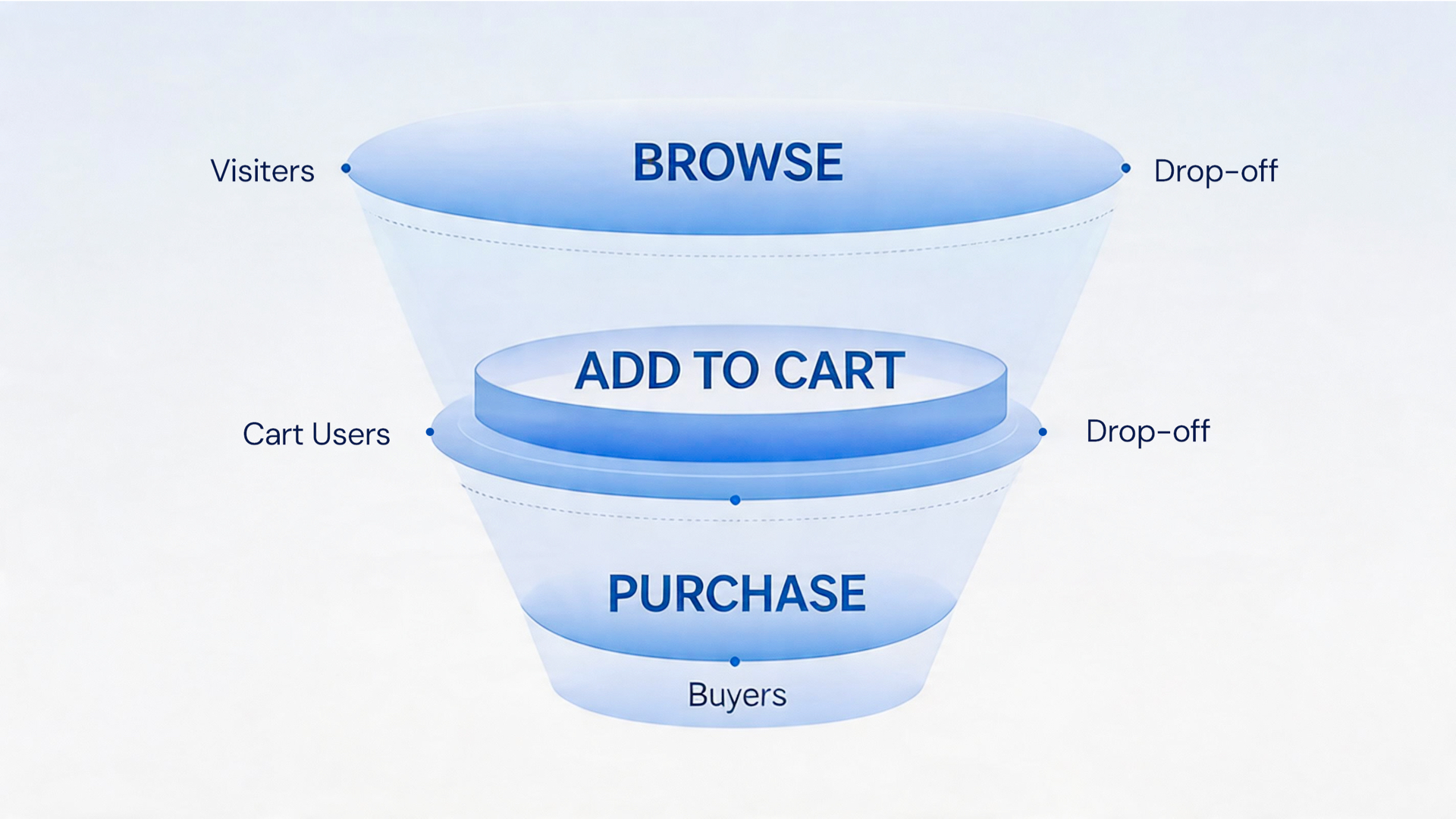
Most sellers build their store in pieces. One tool for product research, another for page building, another for content.
This fragmentation creates inconsistency. The data that informed the product choice does not carry into how the product is presented.
As a result, the final store does not reflect the original insight.
Gartner’s 2025 digital commerce report notes that integrated workflows significantly improve speed and decision quality in ecommerce operations.
When everything is disconnected, decisions become slower and less accurate.
Closing the Gap
The difference between a product that “should work” and one that actually sells is not demand. It is alignment.
Demand brings attention. Conversion turns that attention into revenue.
Most products fail not because they were bad ideas, but because they were incomplete executions.
The advantage today is not just finding what people want. It is building the fastest path from interest to purchase.
That is where real leverage begins.
FAQ
1. If a product has strong demand, why isn’t it selling?
Demand only indicates interest, not purchase intent. If pricing feels unclear, trust signals are weak, or the use case is not obvious, customers will hesitate and leave without buying.
2. How can I tell if my problem is demand or conversion?
Look at your traffic and behavior metrics. If you are getting consistent visitors but low add-to-cart or purchase rates, the issue is conversion, not demand.
3. What are the most important factors that impact conversion?
The three most critical factors are perceived value (pricing and offer), trust (reviews, policies, credibility), and clarity (how well the product’s use case is communicated).
4. How can I quickly improve conversion before launching ads?
Test your product page first. Make sure the value is clear within seconds, include real usage visuals, and remove any uncertainty around shipping, returns, and product quality.
5. Do I need a different product if my current one isn’t converting?
Not always. Many products fail due to poor presentation rather than lack of demand. Improving positioning, content, and user experience can often unlock existing demand.
6. What is the biggest mistake beginners make after validating demand?
They assume validation is enough. In reality, validation is only the first step. Without aligning pricing, trust, and content, demand rarely turns into actual sales.