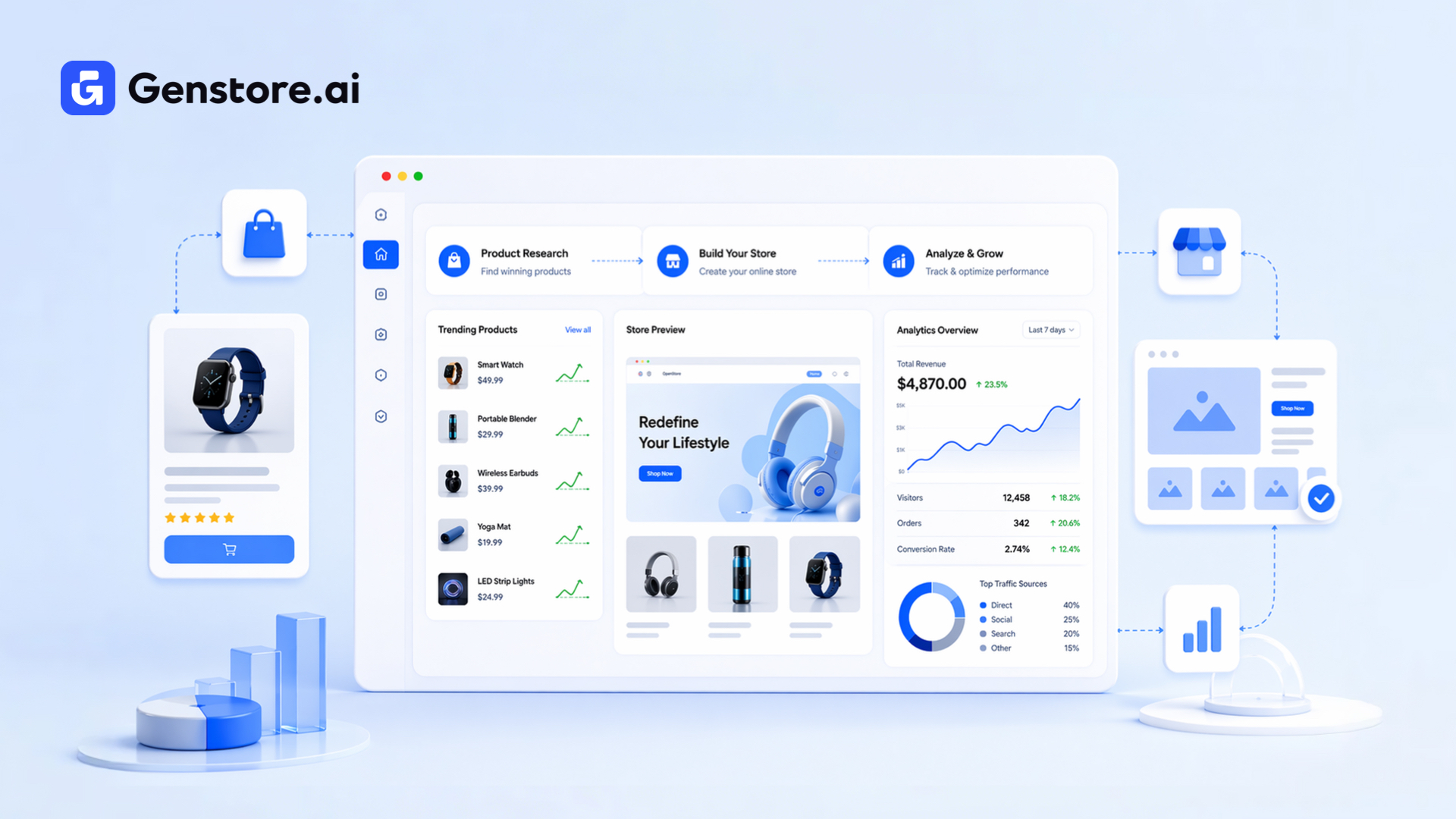
Let’s be honest: the "modern ecommerce stack" has become a bit of a nightmare.
If you’ve been in this game for more than a minute, you know the drill. You start with a store. Then you add a research tool. Then a specialized landing page builder. Then a separate app for social proof, another for SMS marketing, and three different AI chatbots that don't talk to each other.
By the time you’re "set up," you aren’t really a founder anymore—you’re a full-time Software Integrator. You spend more time moving CSV files between browser tabs and troubleshooting API connections than you do actually thinking about your brand or your customers.
The shift we’re seeing in 2026 isn't about finding a "better" tool to add to your pile. It’s about a total structural collapse of the old way of doing things. Founders are moving away from fragmented tools and toward AI Agents. Here is why the "App Stack" is dying, and why integrated execution is the only way to survive the next era of commerce.
The "App Tax" and the Death of Productivity
For years, the industry preached a simple gospel: "There's an app for that." Need to boost AOV? Get an app. Need to find TikTok trends? Subscribe to a dashboard.
But we’ve reached a point of diminishing returns. We’ve traded manual labor for "dashboard labor." According to Gorgias, 96% of ecommerce professionals are now using AI, but here’s the kicker: most are using it as a glorified typewriter. They use AI to generate a product description, then manually copy that into a store, then manually prompt another AI to create an ad.
This is what we call Execution Friction. You have the power of AI, but it’s trapped inside 10 different "boxes" that don't talk to each other. The data shows just how fast this is changing:
- The AI Standard: Triple Whale notes that 80% of retailers are now piloting generative AI, but the real winners are moving toward "Agentic" models that handle the heavy lifting.
- The Agent Adoption: Ecommerce North America reports that 82% of companies are deploying AI agents specifically to bridge the gaps between their disconnected tools.
- The Traffic Wave: AI-driven traffic has grown 4,700% year-over-year (Triple Whale). If your workflow is manual, you simply cannot move fast enough to catch these hyper-fast trend cycles.
The Bottleneck is Coordination, Not Capability
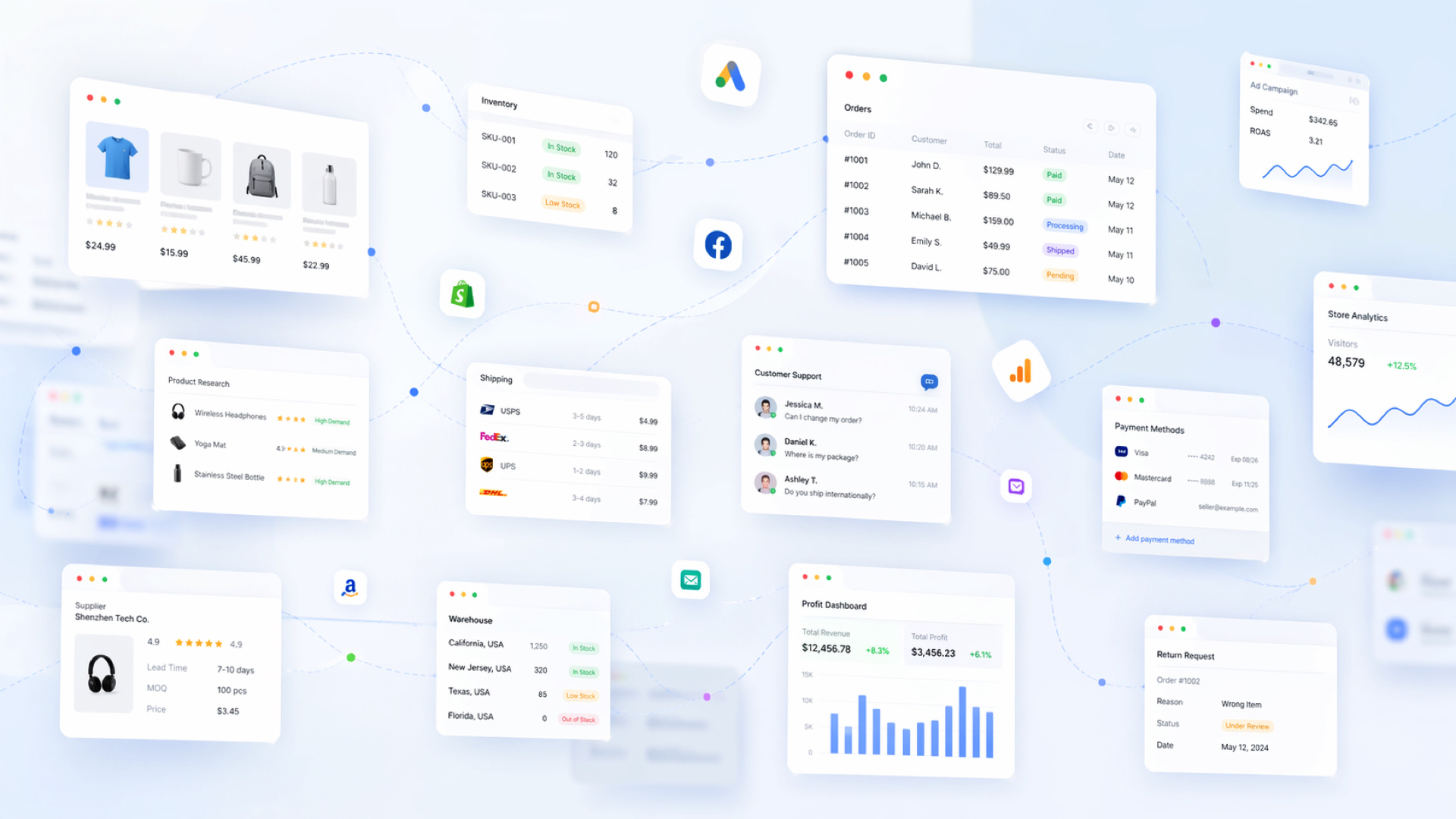
Think about your last product launch. It probably looked like a high-stakes game of digital hot potato.
You found a signal on social media. You checked the numbers on a research platform. You messaged a supplier. You hopped into a page builder. You opened a tab for your AI writer. You set up the Meta or TikTok ads. Finally, you checked your analytics dashboard to see if it worked.
Each of those steps represents a handoff. And every handoff is a chance for your momentum to die.
The industry is realizing that the bottleneck isn't capability (what the tools can do); it’s coordination (how the tools work together). Ecommerce North America found that 69% of professionals now rank speed as their top priority. If your tools don't talk to each other, you're essentially driving a Ferrari but stopping at a red light every 100 yards. You have the horsepower, but the infrastructure is failing you.
Enter the AI Agent: From Hammer to Carpenter
This is where AI Agents change the game.
To understand the shift, you have to understand the difference between a tool and an agent. A tool is like a hammer; it’s great, but it’s useless unless you’re there to swing it. An AI agent is like a carpenter; you give it the blueprints, and it builds the house while you focus on the big picture.
Instead of you being the "glue" that connects five different apps, an AI agent takes a high-level goal—"Find a trending fitness product for Gen Z and launch a test store"—and executes the entire sequence. It finds the data, writes the copy, designs the page, and prepares the launch.
Why the "System" Beats the "Stack"
- Context Retention: In a traditional stack, your ad tool has no idea what your research tool found. An AI agent maintains the "thread" of the business goal from step one to step ten.
- Autonomous Iteration: If an ad isn't performing, an agent can trace the problem back to the landing page copy and adjust it automatically.
- Reduced Decision Fatigue: Founders make thousands of tiny, low-value decisions a day (like "Which font should this button be?"). Agents handle the "micro-decisions" so you can focus on the "macro-strategy."
According to Gitnux, 80% of retail executives are shifting their budgets away from standalone apps and toward integrated AI systems. They've realized that a lift in conversion rates—which can be as high as 45% with AI-driven workflows (Ecommerce North America)—comes from the synergy of the workflow, not just one lucky app.
Speed: The Only Real Moat Left in Ecommerce
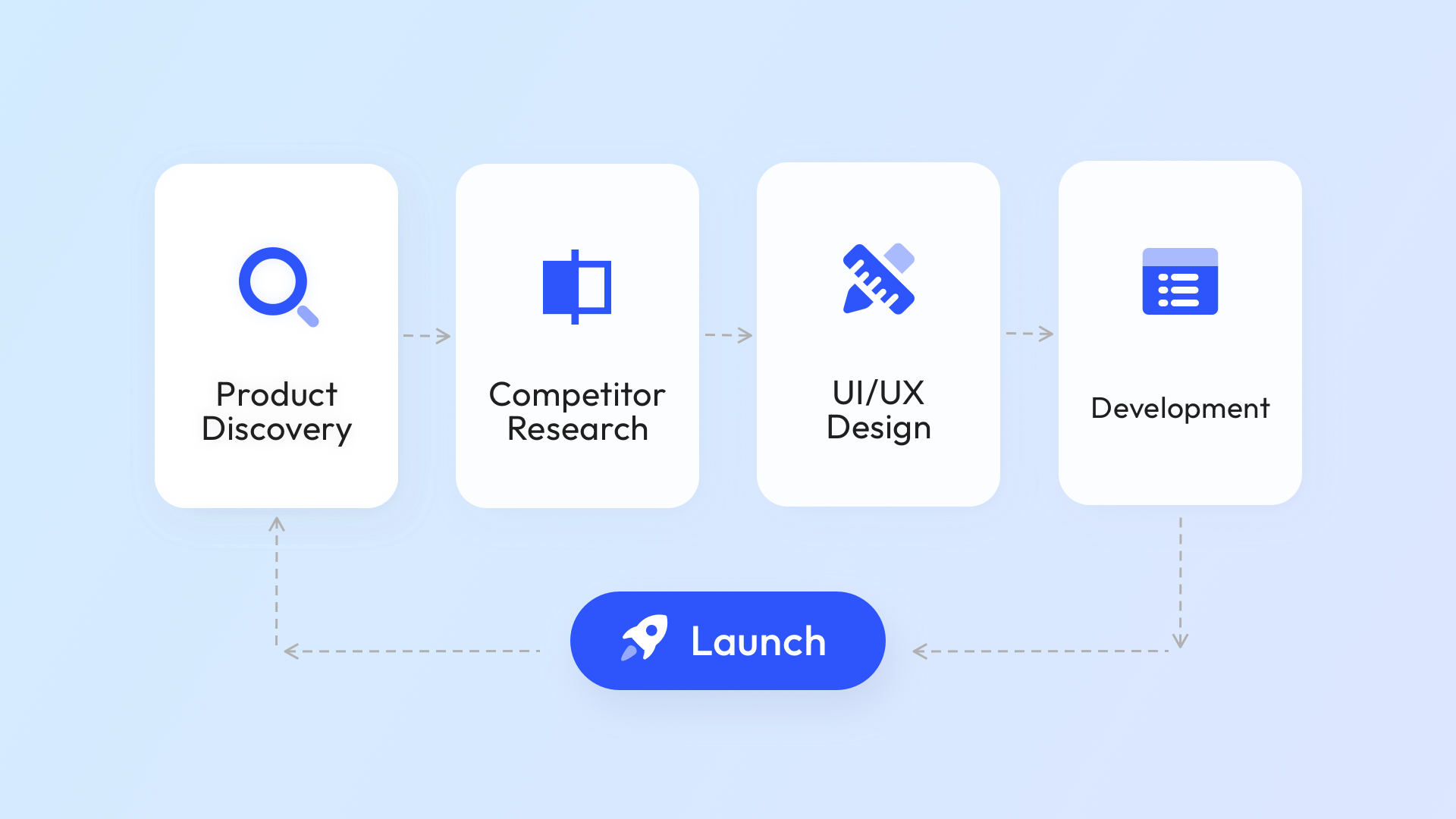
In the early days of DTC, you could win on product quality alone. Then you could win on better branding. Today? Those things are just the "entry fee." The only sustainable competitive advantage left is Velocity.
In 2026, the market moves at the speed of a TikTok scroll. If it takes you three days to launch a product based on a trend, you’ve already lost to the guy who did it in three hours. Reuters recently reported that AI-powered tools contributed to billions in sales during peak seasons because they allowed brands to iterate and pivot in real-time.
Furthermore, consumers are ready for this. 47% of shoppers are now open to AI making purchase decisions for them (Ecommerce North America). If the buyers are using AI to shop, you’d better be using AI to sell. When your execution compounds, your revenue follows.
The Founder’s Audit: Is Your Workflow the Problem?
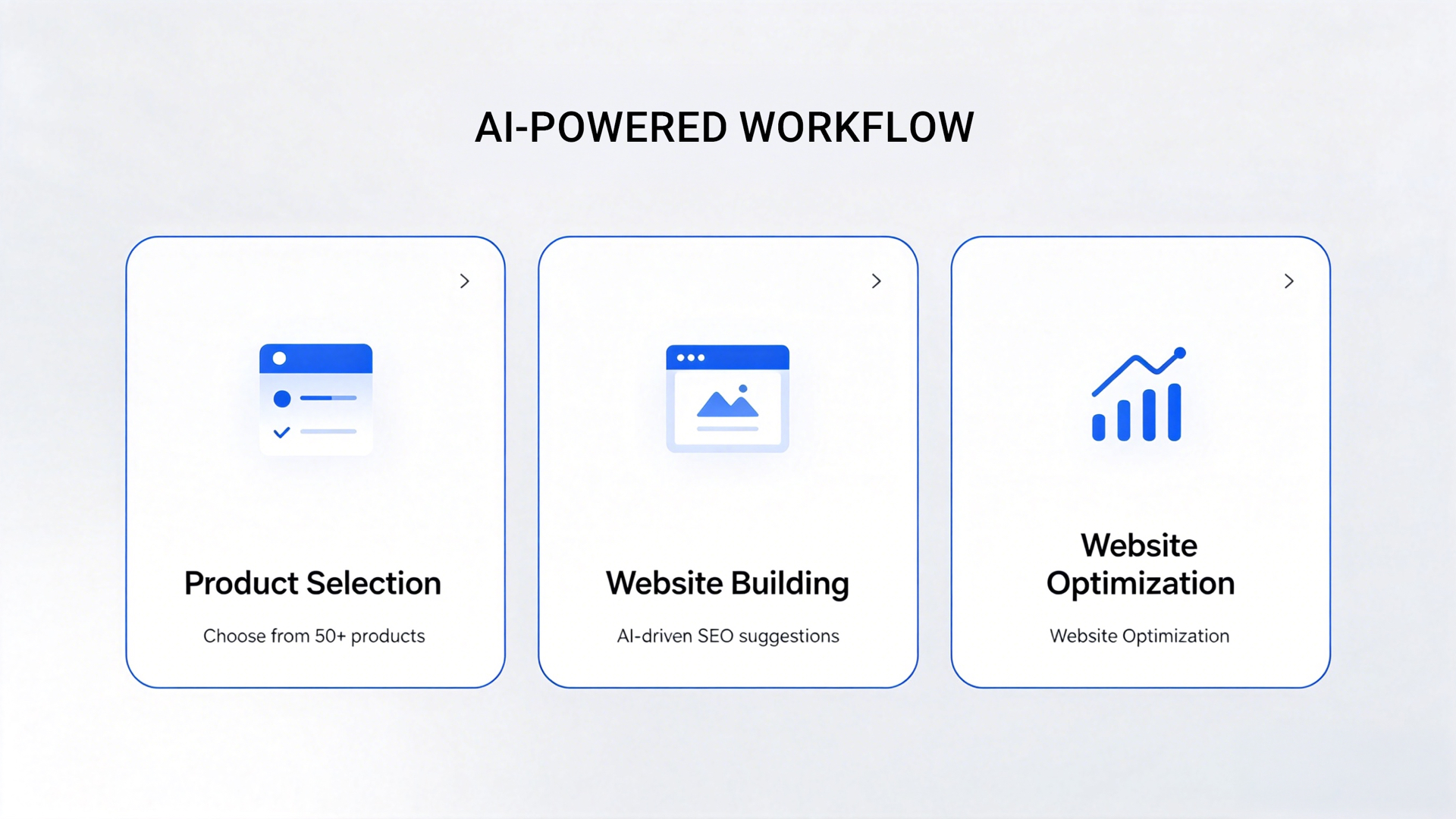
If you're feeling burnt out, it’s probably not the "work" that’s tiring you—it’s the "admin." It’s the invisible friction of managing your own tech stack. Ask yourself these four questions:
- The 5-App Rule: Are you using more than five separate tools just to get a single product from "idea" to "live"?
- The "Copy-Paste" Test: Do you spend more than 30 minutes a day moving text, images, or data from one browser tab to another?
- The Launch Lag: From the moment you identify a "winning" product idea, does it take more than 24 hours to have a live URL and an ad campaign running?
- The Data Silo: Are you making marketing decisions based on one dashboard while your inventory and sourcing are managed in a completely different world?
If you answered "Yes" to these, you aren't running a store; you're managing a bottleneck. You are working for your tools, rather than your tools working for you.
The Bottom Line: Stop Stacking, Start Integrating
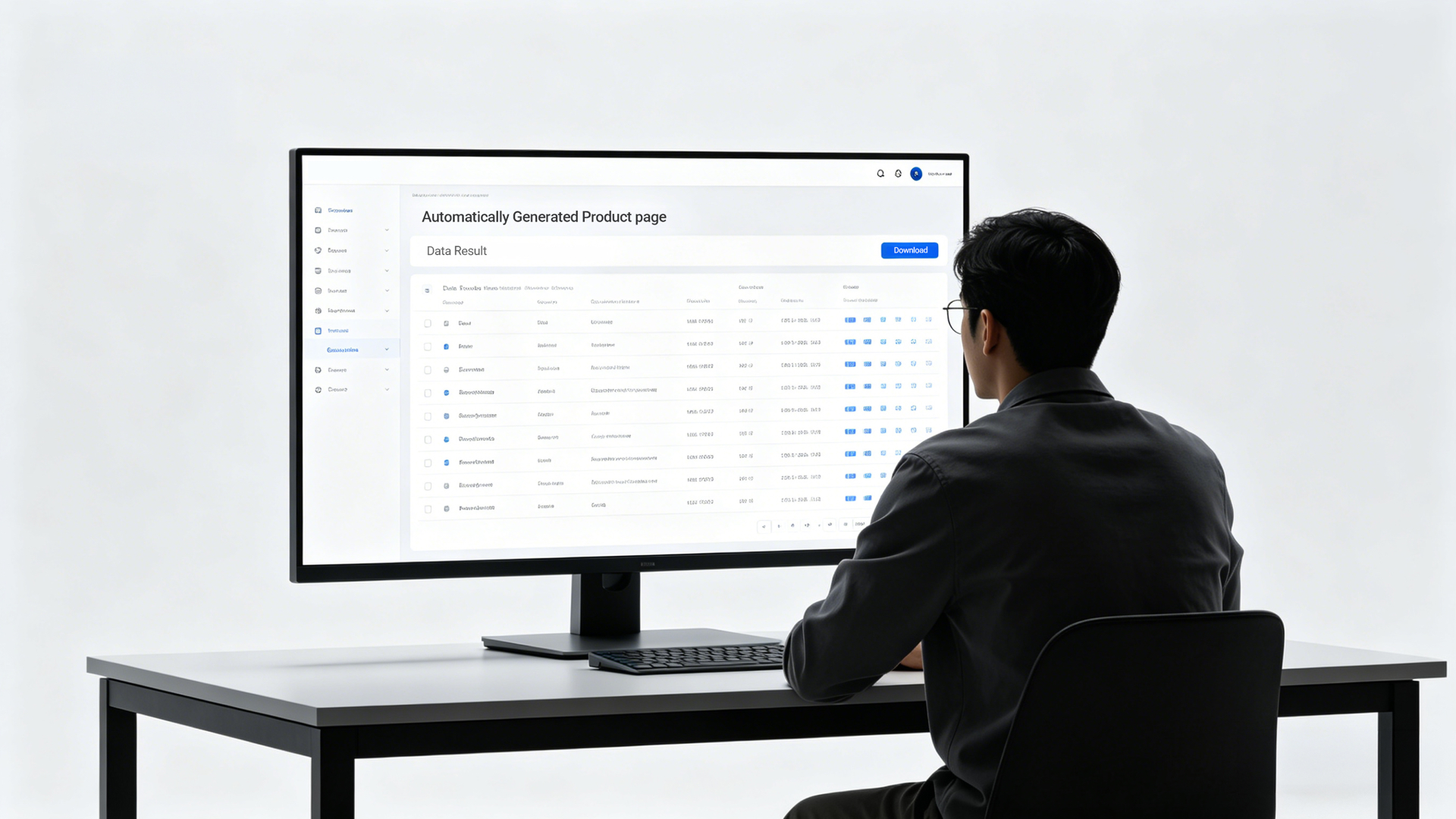
The "App Store" era of ecommerce was a necessary stepping stone, but it’s quickly becoming a relic. We are moving toward a "Headless Execution" model where founders act more like Directors and AI Agents act like the Crew.
The goal isn't to have the most sophisticated, expensive stack on the block. The goal is to have the shortest distance between a good idea and a paying customer.
As we move deeper into 2026, the winners won't be the ones with the most tools. They’ll be the ones with the most automated momentum. It’s time to stop being the glue and start being the architect. Your business—and your sanity—will thank you for it.
FAQ
What’s the actual difference between an AI tool and an AI agent?
Think of a tool as a specialist (e.g., a copywriter). It does one thing when asked. Think of an agent as a project manager who hires the copywriter, builds the site, and launches the ads for you based on a single goal.
Will AI agents make my brand feel "robotic"?
Only if you let them. The smartest founders use agents to handle the "grunt work" (research, store setup, data syncing) so they actually have more time to focus on the creative brand story and human connection that AI can't replicate.
Is it expensive to make the switch?
Actually, it usually saves money. Most founders find they can replace 5-10 specialized monthly subscriptions with one integrated AI agent platform, lowering their "app tax" significantly.
Does this mean I don't need a team anymore?
Not at all. It means your team can stop doing repetitive data entry and start focusing on high-level strategy and creative direction. It turns a 2-person team into a 10-person powerhouse.
How do I get started?
Audit your "handoffs." Look at the points in your day where you are manually moving data from one tool to another. That’s exactly where an AI agent needs to step in.