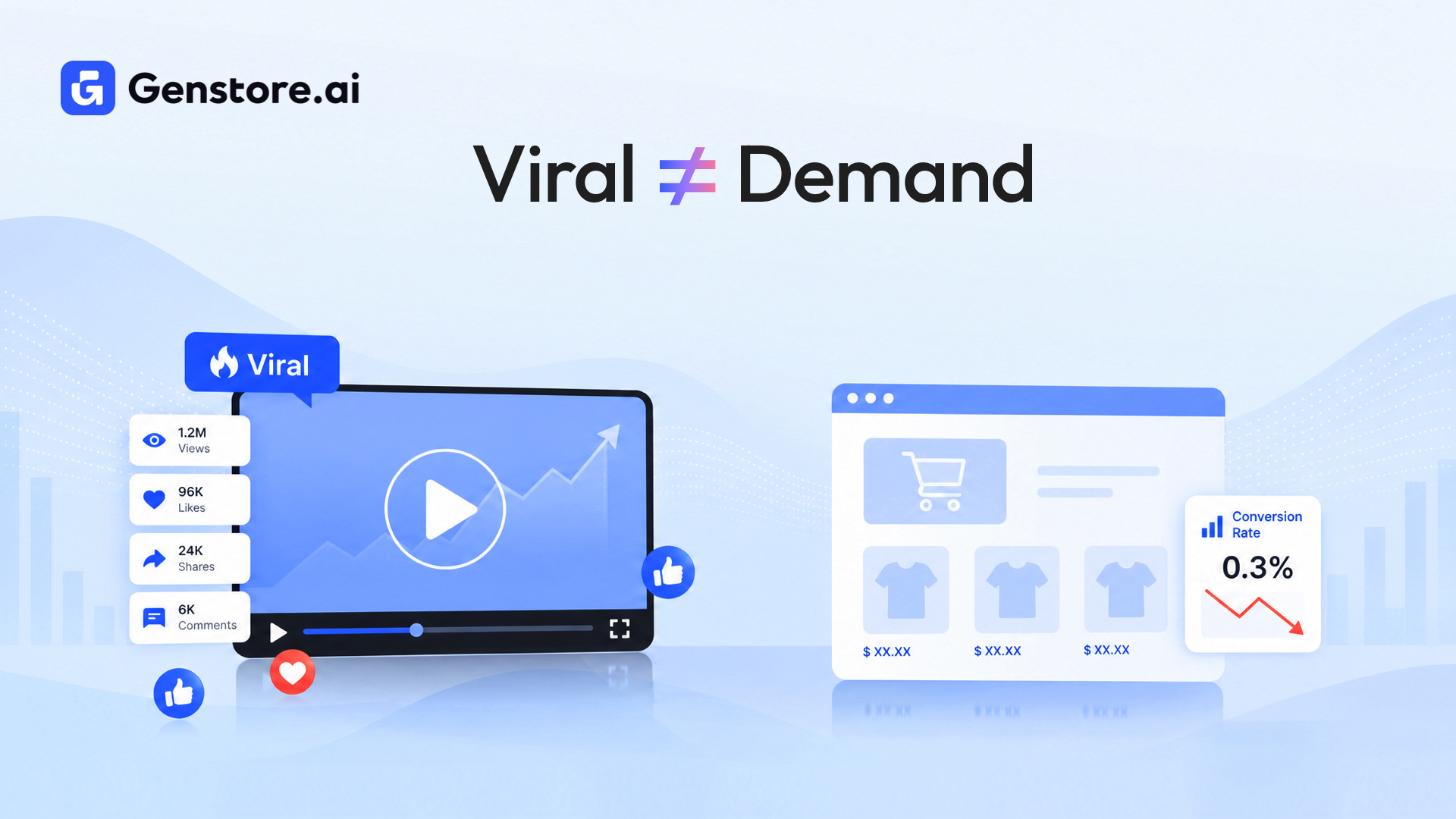
Every summer, a predictable cycle repeats: a product explodes on TikTok, racks up millions of views, and suddenly every dropshipper and brand is racing to list it. Then, the inevitable happens. Within weeks, conversion rates crater, ad costs skyrocket, and warehouses are left full of dead inventory.
This isn't just bad luck—it’s a structural failure.
In 2026, the gap between "getting noticed" and "getting paid" is wider than ever. Most sellers are optimizing for visibility, while the market only rewards validated demand.

The Core Problem: Virality is Not Purchase Intent
A viral product is engineered to capture attention. A converting product is engineered to satisfy intent. These represent two fundamentally different psychological states.
Social platforms thrive on novelty, emotion, and "scroll-stopping" aesthetics. Ecommerce, however, relies on utility, urgency, and trust.
The data backs this up. According to HubSpot marketing statistics, marketers increasingly struggle with lead quality even when traffic is peaking; in fact, 40% of pros now prioritize lead quality over sheer volume as their North Star metric.
The lesson? Attention is easy to scale, but intent is not.
Search behavior reveals an even deeper truth. Roughly 32.9% of users discover products through search, meaning a third of your audience is actively hunting for solutions when they are already in a "buying" headspace. If your product only lives in the passive social feed but has zero footprint in search intent, you are fighting an uphill battle for every single cent of revenue.
Where Most Sellers Go Wrong
The fatal mistake in modern ecommerce is treating all engagement as equal. To succeed, you must distinguish between three distinct signals:
- Social Engagement: "This looks cool." (Low commitment)
- Search Intent: "I need this to solve X." (Medium commitment)
- Purchase Validation: "I trust this enough to buy it." (High commitment)
A TikTok trend might generate a billion impressions, but if users aren't searching for specific use cases, the interest is likely driven by fleeting curiosity.
Recent marketing data shows that nearly 70% of leads now materialize later in the buying journey, after users have conducted their own independent research. Buyers aren't impulse-reacting like they used to; they validate first. If your "viral" product can’t survive that scrutiny, it will never convert.

The Summer Demand Signal Model
To stop chasing "ghost trends," you need to evaluate potential products through a three-layer filter:
1. The Attention Signal (The "Hook")
- Metrics: Views, Likes, Shares.
- What it tells you: People noticed the content. It does not mean they want the item.
2. The Intent Signal (The "Need")
- Metrics: Search queries with modifiers like “best,” “for,” or “near me.”
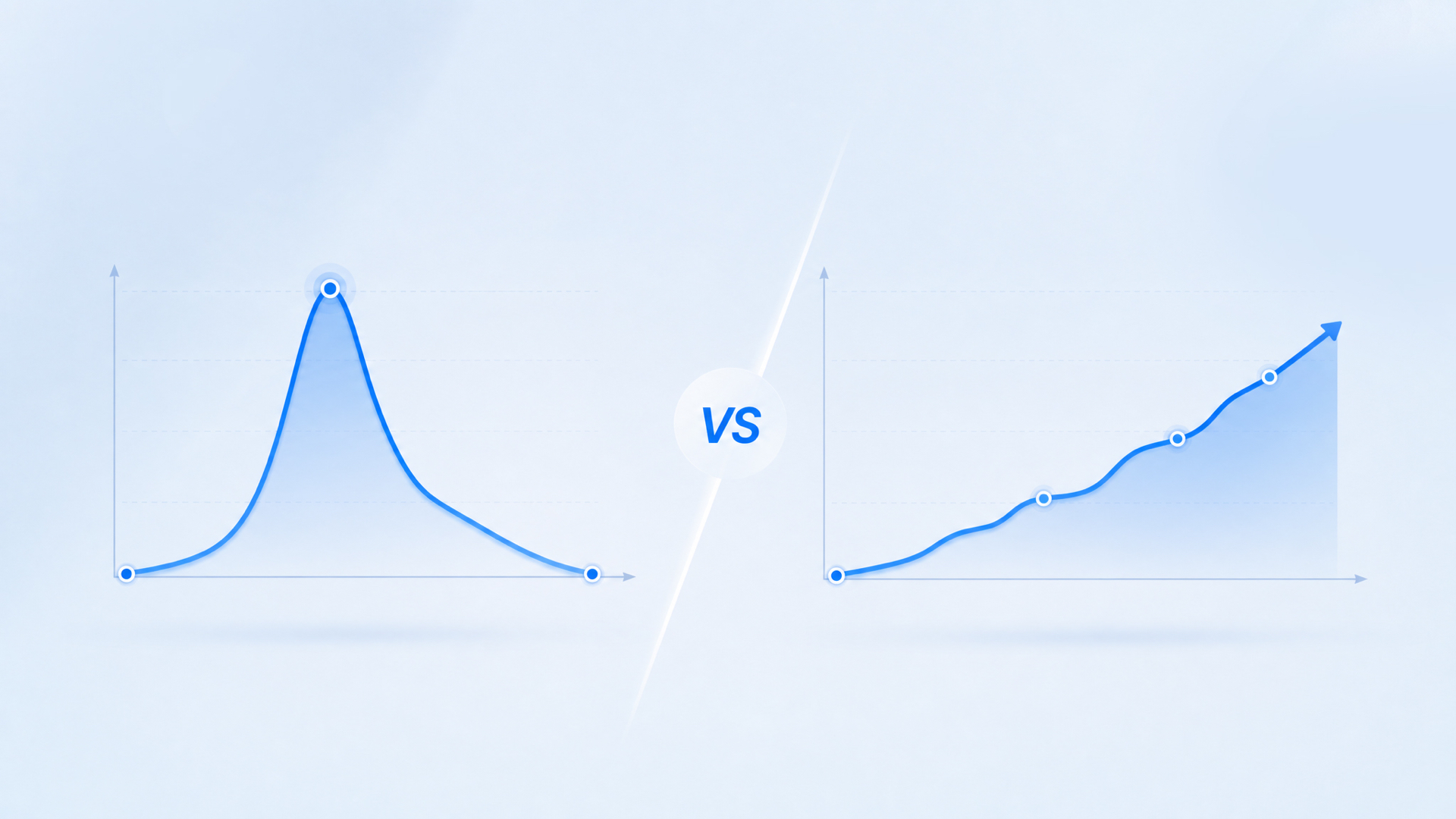
- The Test: Use Google Trends to see if the interest is a vertical spike (flash in the pan) or a sustained upward curve. If there’s no consistent search behavior, the demand is likely artificial.
3. The Conversion Signal (The "Value")
- Metrics: Comments discussing real-world problems, reviews mentioning longevity, and UGC showing practical utility rather than just "unboxing" reactions.
- The Reality: HubSpot’s marketing industry trends report emphasizes that personalization and relevance are now the primary drivers of conversion, not reach. Viral products fail because they often lack real-world relevance once the "cool factor" wears off.
How to Pressure-Test Your Summer Lineup

Before committing capital to a new product, ask yourself these three questions:
- Search vs. React: Are people actively looking for this solution, or just reacting to a video?
- Utility vs. Emotion: Do the comments ask "Where can I get this?" or "How does this solve [X]?"
- Specific vs. General: Can you define a clear "Job to be Done"?
Case in Point: A generic "mini desk fan" might go viral for its cute design, but a "portable neck fan for outdoor construction workers" has a defined use case and higher intent, leading to much more stable conversion rates.
Why Seasonal Trends Are High-Stakes
Summer products have a "ticking clock." If you misread the signals, you don’t just lose your ad spend—you lose the entire season.
HubSpot’s channel strategy insights show that because brands now operate across so many channels at once, competition is fiercer and trend lifecycles are shorter. By the time a product feels "huge" on social media, the window of profitability is likely already closing.
The Future: AI-Driven Product Validation
Manual research is too slow for the 2026 market. Smart sellers are now using AI to aggregate signals across social platforms, search engines, and marketplaces simultaneously.
Instead of asking "Is this trending?", tools like Genstore allow you to ask:
- "Is this demand sustained?"
- "Are users describing a recurring pain point?"
- "Is the search-to-view ratio healthy?"
This shifts your strategy from reactive picking (chasing what's hot) to predictive validation (investing in what's inevitable).
The Bottom Line
The most profitable stores in 2026 aren't "trend-hunters"—they are signal-readers. They use social media as a discovery tool, but they never use it as a decision engine. They understand that real revenue doesn't come from what looks good on a screen; it comes from what solves a problem in a customer's life.
As you build your summer lineup, don't look for the loudest product. Look for the one with the strongest "quiet" signals. That’s where the real margins are hiding.