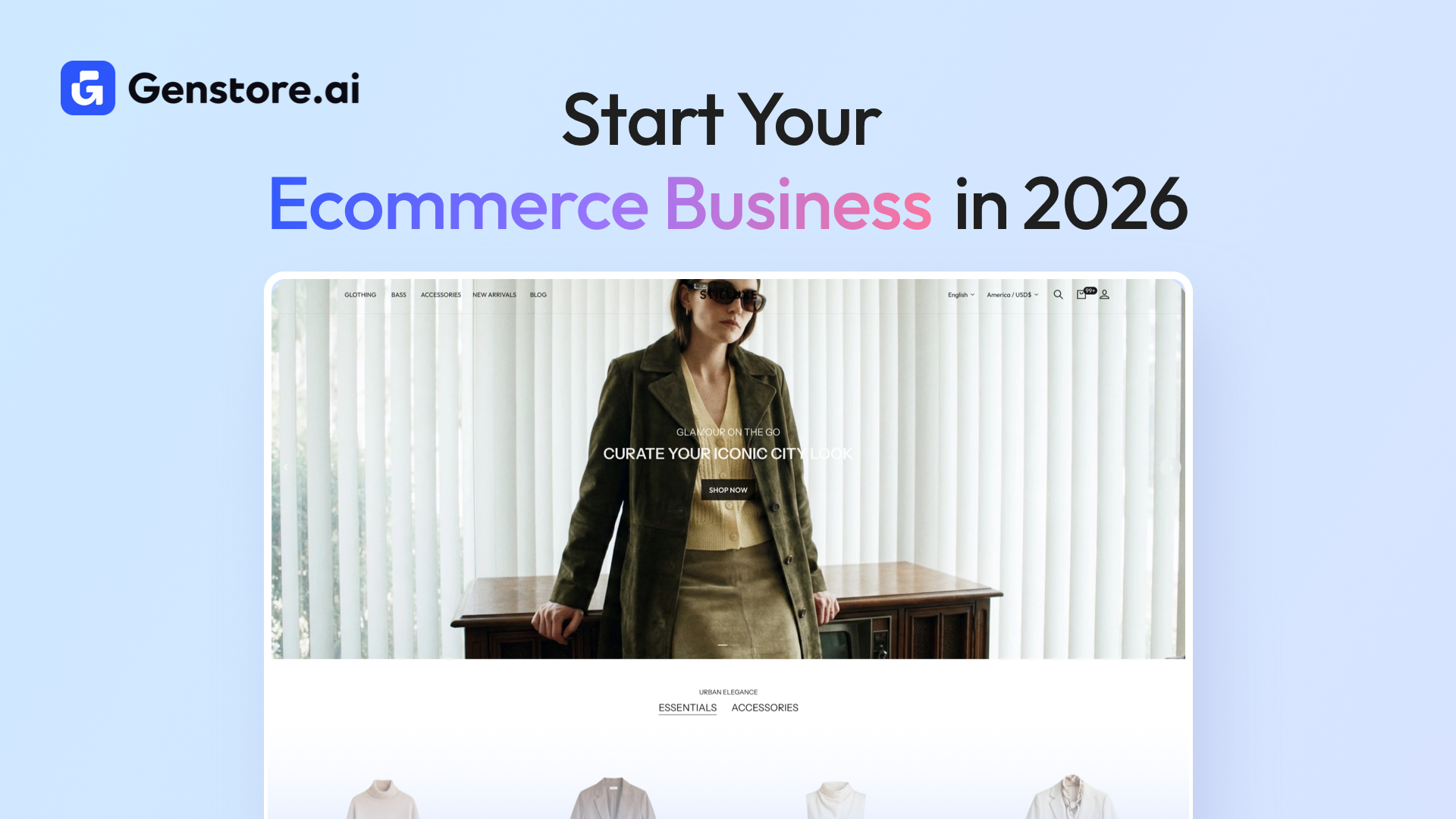
Starting an ecommerce business used to feel overwhelming.
You had to pick the “right” product, learn multiple tools, deal with suppliers, and spend weeks just getting your store live. Most beginners never made it past that stage.
In 2026, that bottleneck is gone.
AI has fundamentally changed how ecommerce works. What used to take weeks can now be done in hours. More importantly, you no longer need to get everything right upfront. You just need to start testing faster.
This guide walks you through the full process from zero to your first order, with a clear focus on how AI reduces friction at every step. If you follow this properly, you can launch a simple, testable store in a weekend.
Why AI Changes the Game for Beginners
Ecommerce is still competitive, but the rules have shifted.
According to recent data, over 80% of ecommerce businesses are already adopting AI tools in some form, and AI-driven experiences can generate up to 30% more revenue compared to traditional setups
At the same time, conversion rates remain low across the board. Most stores convert between 2% and 4%.
That gap is where opportunity lives.
Success in ecommerce is no longer about building the perfect store. It is about launching quickly, testing aggressively, and iterating based on real data. AI makes that possible by compressing time.
Step 1: Start with a Testable Product, Not a Perfect One
The biggest mistake beginners make is trying to find a “winning product” before they launch.
In reality, products are validated through testing, not research alone.
A better approach is to look for products that are easy to test:
● They solve a clear, visible problem
● They can be demonstrated in short-form video
● They do not require complex sizing or customization
● They have existing demand signals on platforms like TikTok or Amazon
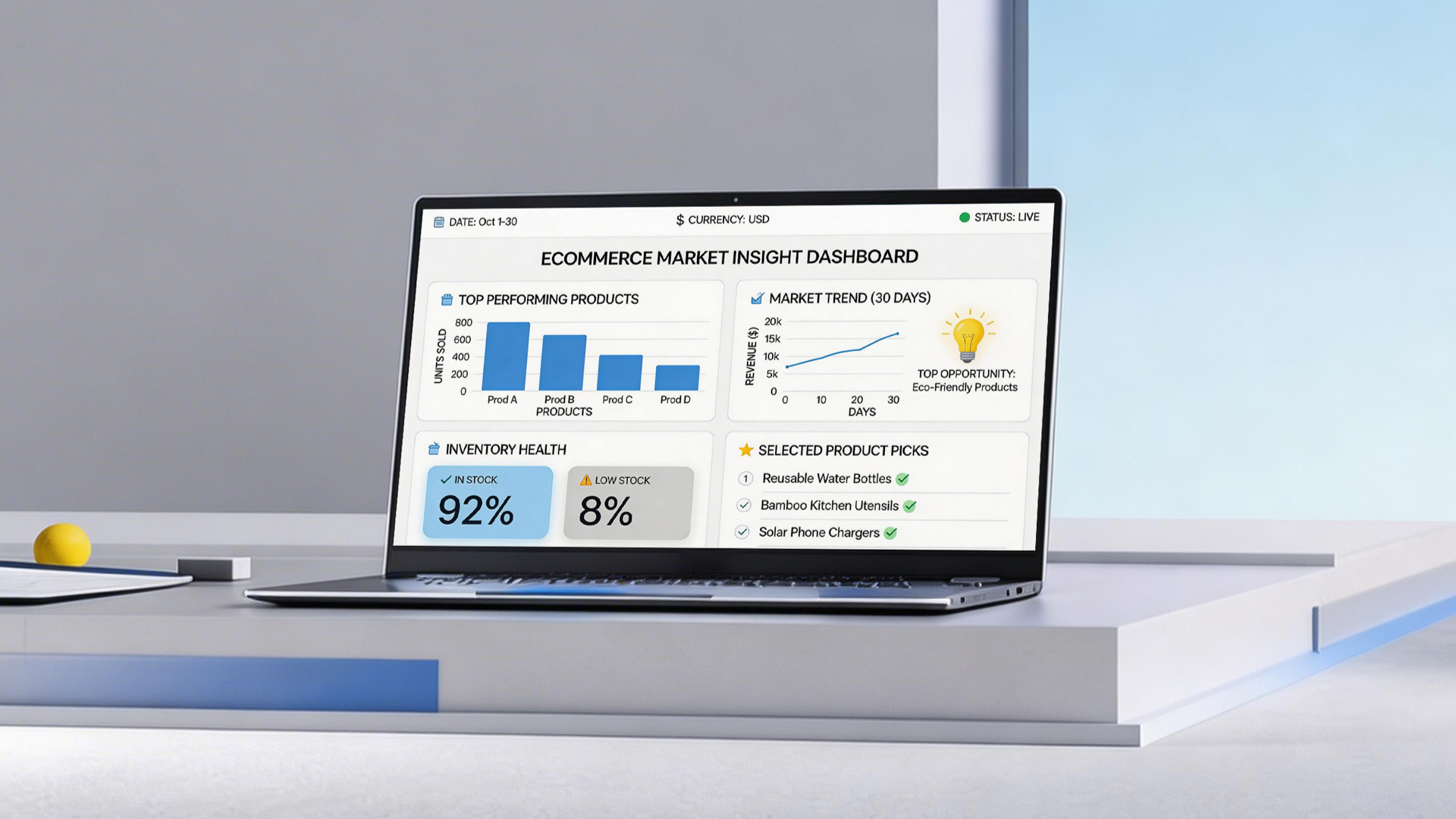
Instead of spending days guessing, you can use AI tools to scan trends, summarize customer pain points, and even generate positioning angles.
What matters most is speed. Modern ecommerce increasingly follows a “sell before you scale” model, where you validate demand first before investing in inventory or branding. This approach is becoming more common as AI lowers the cost of experimentation
Step 2: Build a Store That Is Good Enough to Convert
Your first store does not need to be impressive. It needs to be functional, clear, and trustworthy.
Many beginners get stuck designing logos or tweaking layouts. That rarely moves the needle.
What actually impacts conversion:
● Clear product positioning
● Clean product page structure
● Fast loading speed
● Mobile-first experience
Even a one-second delay in load time can reduce conversions by around 7%.
This is where AI-native builders like Genstore change the workflow.
Instead of manually setting up pages, writing copy, and sourcing images, you can generate a complete storefront with:
● Product descriptions optimized for conversion
● AI-generated product visuals
● Structured layouts based on proven ecommerce patterns
The key advantage is not just convenience. It is speed. You can go live in hours instead of days, which means you can start testing faster.
Step 3: Set Up Payments Without Overcomplicating It
Payment setup used to be a technical hurdle. Now it is mostly plug-and-play.
For a beginner store, you only need two things:
● A primary payment processor like Stripe
● A secondary option like PayPal
What matters more than the tools themselves is trust.
Customers need to feel safe completing the purchase. Around 1 in 4 shoppers abandon carts due to lack of trust signals or unclear checkout processes.
Simple improvements can make a real difference:
● Clear refund and return policies
● Visible contact information
● Straightforward pricing with no surprises
AI can help generate these assets instantly, which removes another common bottleneck for new sellers.
Step 4: Use Fulfillment Models That Keep Risk Low
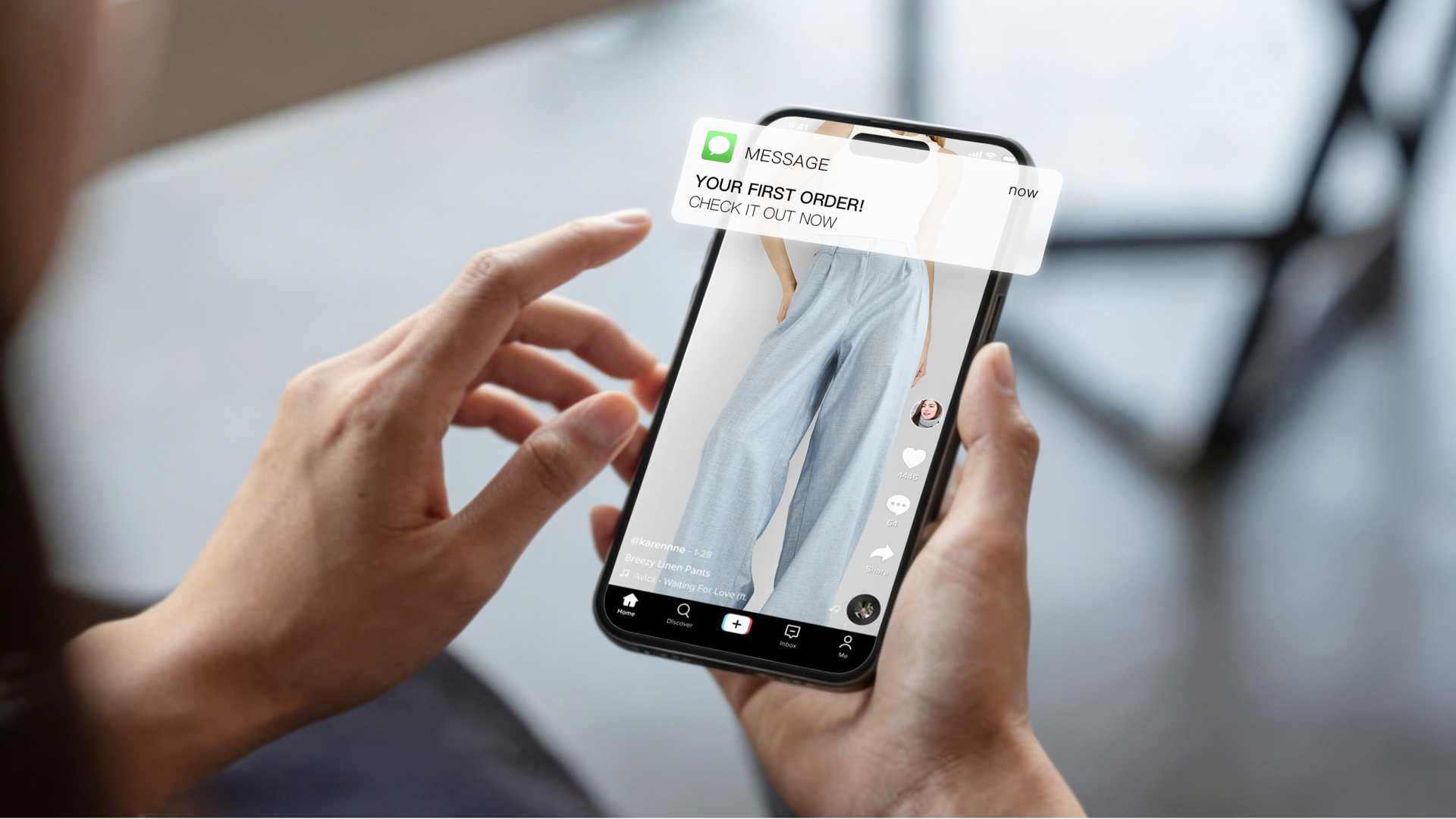
You do not need inventory to start.
In fact, for most beginners, avoiding inventory is the smartest move.
Common entry points include:
● Dropshipping
● Print-on-demand
● Digital products
Each of these allows you to validate demand before committing capital.
From the customer perspective, expectations are clear. They want transparency and reliability. Over 60% of shoppers expect tracking, and more than half prioritize free or clearly communicated shipping.
AI plays a supporting role here by helping you:
● Sync product data from suppliers
● Generate accurate shipping descriptions
● Set expectations clearly on your product pages
This reduces customer confusion and improves post-purchase experience.
Step 5: Focus on Getting Your First Order
This is where most ecommerce advice becomes vague. Traffic is often treated as an afterthought, but it is the core of your business.
For beginners, the most effective starting point in 2026 is still short-form video.
TikTok and similar platforms reward simple, authentic content. You do not need high production quality. You need clarity and relevance.
Strong performing content usually falls into a few categories:
● Problem and solution demonstrations
● Before and after transformations
● Simple product use cases in real life
AI can dramatically speed up this process by generating:
● Video scripts
● Hook variations
● Ad copy angles
Instead of testing one idea at a time, you can test multiple angles quickly. That speed is what leads to your first sale.
A Simple MVP Store You Can Launch This Week
If you are starting from zero, do not try to build a full brand.
Start with a minimum viable store.
Keep it simple:
● One product
● One landing page
● Three pieces of content
● One traffic source
Here is a realistic timeline.
Day 1
Set up your store using an AI builder like Genstore. Generate your product page, visuals, and core messaging.
Day 2
Create three short-form videos with different angles. Focus on clear problem-solution storytelling.
Day 3
Start posting or running small-budget ads. Watch for engagement and early signals.
Day 4 to 7
Double down on what works. Adjust your messaging, improve your product page, and refine your creatives.This approach removes most of the complexity and focuses on what actually matters: validation.
Final Thoughts: Speed Is Your Biggest Advantage
The barrier to entry in ecommerce has dropped, but the speed of competition has increased.
That is why the traditional approach of overplanning no longer works.
The fastest way to learn is to launch. The fastest way to improve is to test. And the fastest way to scale is to double down on what already shows traction.
AI is not just a tool. It is a multiplier.
If you use it correctly, you can go from idea to first order in days instead of months.
If you are ready to start, build your first MVP store with Genstore and get your product live today.