
Most early-stage ecommerce sellers think their problem is product selection. They assume successful veterans have a “golden gut,” better taste, or access to some secret vault of winning products.
In reality, the issue isn’t what you choose. It’s how you choose.
Most product research today is a feedback loop of fragmented signals. You spot a trend on TikTok, check Amazon reviews, scroll AliExpress for pricing, jump into Google Trends, then browse ad libraries. Every tool gives you a partial truth, but none of them give you a decision.
That gap is where momentum dies.
The “Restart” Trap
When you move from TikTok to Amazon to AliExpress to Google Trends, you are restarting context every single time. Nothing carries over. Nothing compounds.
This creates three predictable outcomes.
First, over-research without clarity. You build more spreadsheets but gain no real confidence.
Second, false negatives. You kill good products because one isolated signal looks weak.
Third, false positives. You launch weak products because no single tool shows full risk.
According to McKinsey’s State of Organizations 2026, companies that reduce duplication and synchronize information flows see significant gains in speed-to-market, especially when decision systems are unified rather than fragmented. You can explore the full report here.
In ecommerce, the opposite shows up as analysis paralysis, where more data leads to less certainty.
Why More Data Is Slowing You Down

The common belief is simple. More data leads to better decisions.
In ecommerce product research, that is only true when data is structured.
Without structure, more inputs increase cognitive load instead of clarity. You are not learning faster. You are switching contexts faster.
Research from the Baymard Institute on cart abandonment shows that roughly 70% of online shopping carts are abandoned due to hesitation and friction in decision-making.
Product selection behaves the same way. Uncertainty doesn’t just kill checkout conversion. It kills ideas before they ever become tests.
A Workflow That Actually Leads to Decisions

A better system does not require more tools. It requires fewer steps with a strict sequence.
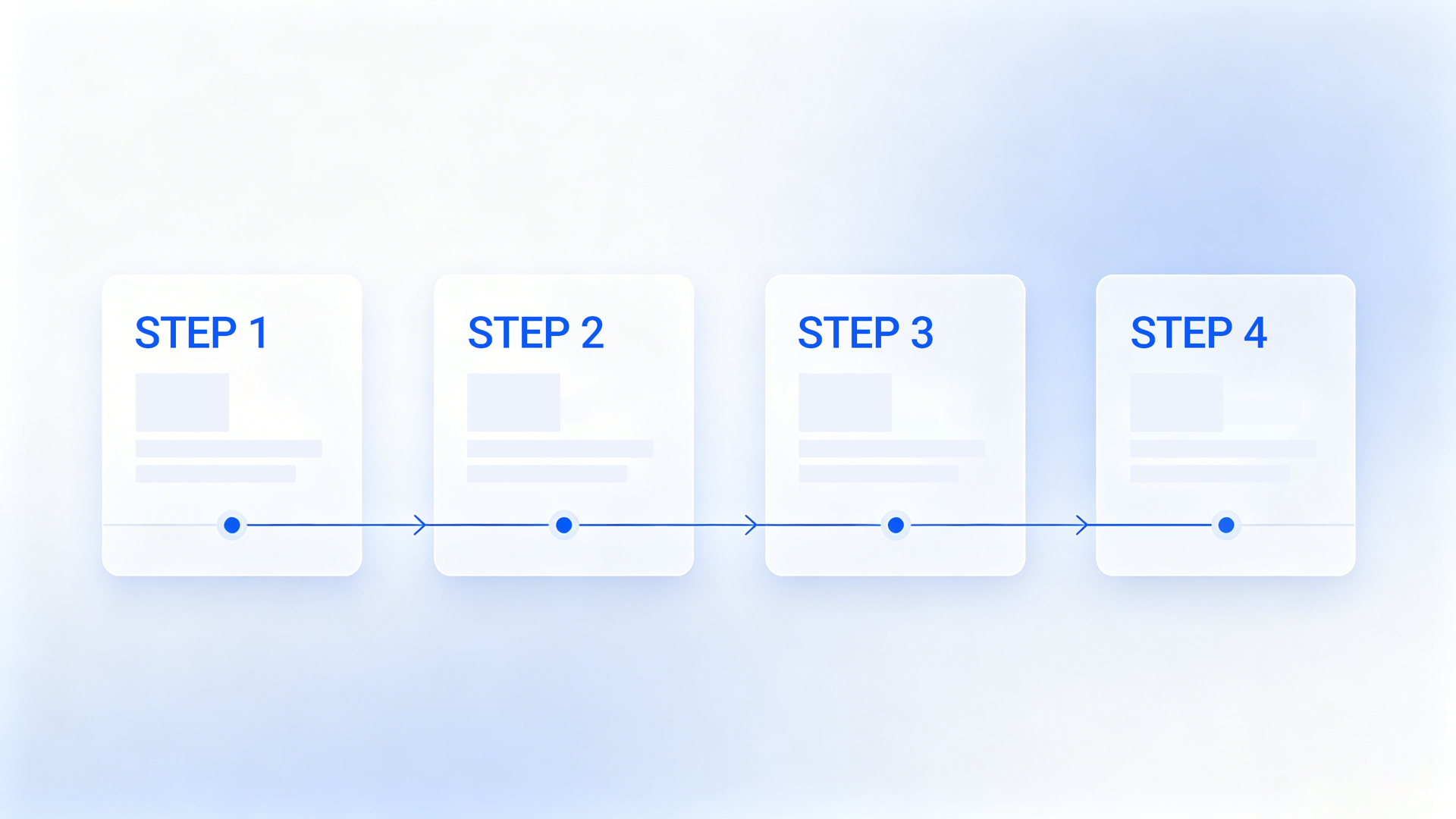
Start with signal capture. Use one primary source of demand signals such as TikTok creative trends or category velocity. The goal is direction, not validation.
Move into demand confirmation. Use Google Trends to confirm whether interest is stable rather than a short-term spike.
Then check unit economics. Ask one question. Can this product survive real acquisition costs and shipping pressure? If not, stop immediately.
Finally, evaluate competitive positioning. Not to avoid competition, but to find gaps in messaging, audience, or angle.
Each step answers one question. Nothing repeats. Nothing overlaps.
Fragmented Tools vs Unified Systems

Most sellers operate with a toolkit mindset. Each platform is strong individually but disconnected as a system.
The result is predictable.
You research. You validate. You check suppliers. You compare ads. Then you repeat.
Instead of moving forward, you restart the decision cycle.
Shopify research shows that merchants who integrate operations and decision workflows scale faster because they reduce friction in execution cycles. You can read more in their analysis here.
The same principle applies earlier in the funnel. If product selection is fragmented, store growth will also be fragmented.
Where Genstore Changes the Workflow
Genstore is built on a simple assumption. The problem is not lack of ideas. It is lack of structured execution.
Instead of forcing sellers to connect trends, suppliers, pricing, and validation manually, Genstore centralizes the decision layer.
Product signals, market validation, and store readiness are not separate steps. They are part of one continuous flow.
Gartner’s research on decision intelligence highlights a shift toward systems that orchestrate decision execution rather than simply aggregating data points. Learn more here.
The Bottom Line
You do not need more product ideas. You need fewer repeated decisions.
Most ecommerce sellers fail not because they choose the wrong products, but because they never complete the decision process cleanly.
Once you remove fragmentation, product research stops being a cycle of endless evaluation and becomes a system for consistent execution.
The goal is not to find perfect products.
The goal is to stop re-evaluating the same imperfect ones and start shipping.