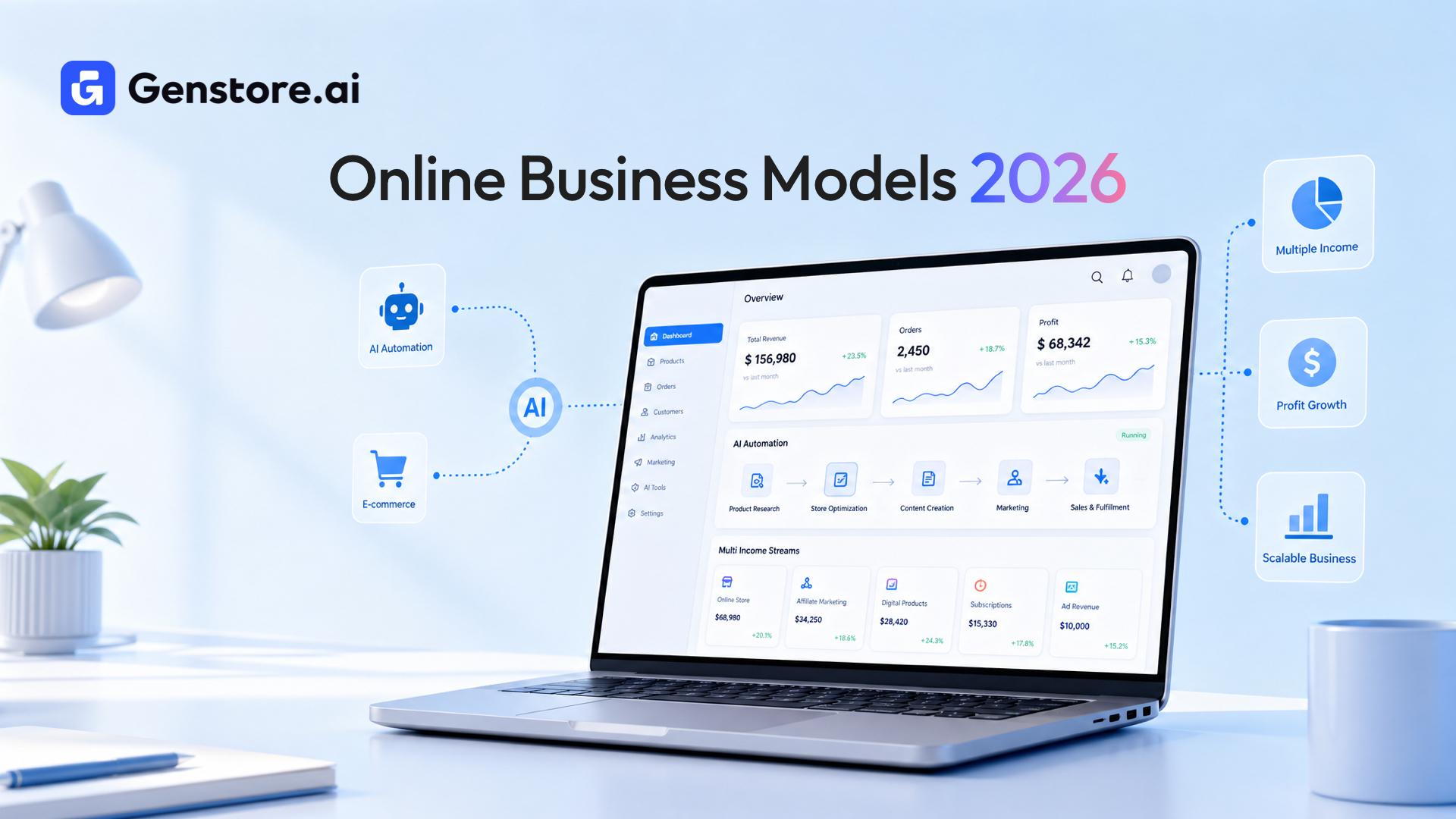
Let’s be real for a second. The "golden era" of online business—the one where you could launch a basic dropshipping store, crank up some Facebook ads, and pray for a 2x ROAS—is not just dying; it’s buried.
If you’re still trying to play the 2020 version of the ecommerce game, you’re essentially fighting a war of attrition. According to Statista, while global ecommerce revenue is still technically climbing, the reality on the ground is much grittier: profit margins are tightening at a brutal pace. Between rising customer acquisition costs (CAC) and a hyper-saturated market, the "old way" is becoming a luxury most founders can’t afford.
But here’s the twist: the opportunity hasn't shrunk—it’s just changed its shape. While the "middle class" of mediocre dropshippers is getting wiped out, a new breed of lean, AI-native entrepreneurs is quietly building empires with almost zero overhead.
The winners in 2026 aren't just selling "stuff." They’re building leverage. They’re using AI not as a buzzword, but as a digital workforce. As McKinsey recently highlighted, companies adopting AI-driven workflows are seeing productivity gains of up to 40 percent. That’s not just a marginal improvement; that’s an entirely different business math.
If you’re looking to build something that actually survives the next 36 months, here are the three models that actually have legs.
1. The AI Micro-Agency (Selling Outcomes, Not Hours)
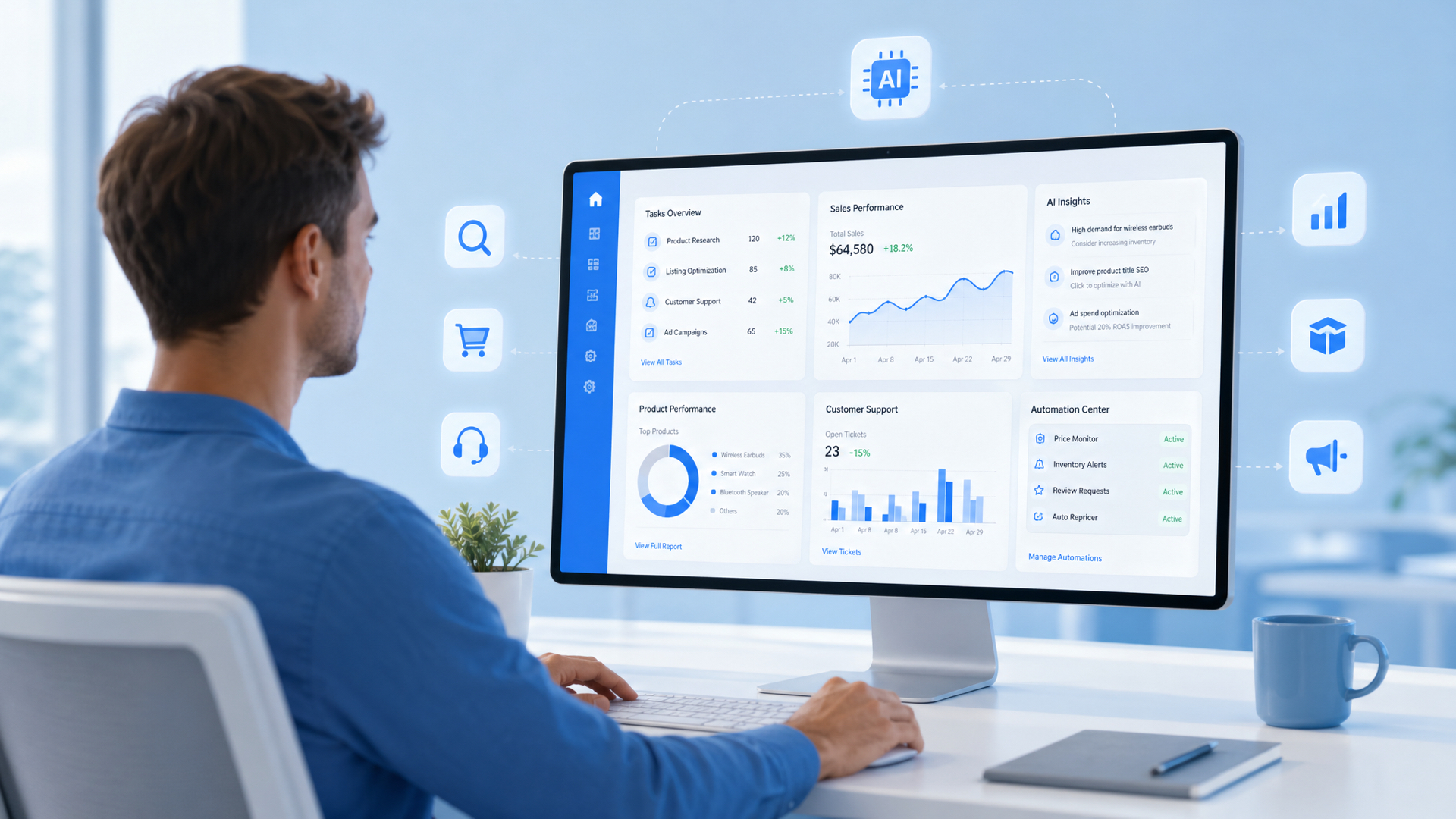
Forget the traditional agency model with high-rent offices and endless Zoom calls. The AI Micro-Agency is the new lean machine. It’s built on a simple premise: a single human, armed with a sophisticated AI stack, can now produce the output that used to require a five-person team.
We’ve seen a massive shift in how brands consume services. Merchants are no longer looking for "hands to do the work"; they are looking for "systems that deliver results."
Why it works now:
Shopify has already noted that merchants using AI-powered tools are launching stores faster and iterating on products with far more efficiency. This creates a massive secondary market: the demand for specialists who can set up, tune, and optimize these AI systems.
The Strategy:
Don't be a generalist. Generalists get ignored. Instead, productize a very specific pain point.
- The Play: Instead of saying "I do digital marketing," say "I build AI-driven, automated winning-product discovery systems for TikTok Shops."
- The Margin: Since your "employees" are essentially API calls and automation scripts, your profit margins are astronomical. You are selling a proprietary workflow, and your cost of delivery stays flat even as you scale.
2. Creator-Led Commerce (The Trust Arbitrage)

The biggest shift in the last few years? People no longer buy from faceless logos; they buy from people they trust. We are living in the age of Trust Arbitrage.
According to HubSpot, over 30 percent of Gen Z consumers now prefer buying products tied to creators they follow. That trust layer is a moat that traditional stores simply cannot buy with an ad budget.
In the old model, you found a product on AliExpress and then went hunting for an audience. In 2026, the most successful brands flip the script: Build the audience first, then let them tell you what to sell.
The Content-to-Commerce Loop:
Instead of burning cash on cold Facebook traffic, creators own their distribution.
- The Content: You use short-form video (TikTok, Reels, Shorts) as your R&D lab. You aren't "testing products" in the traditional sense; you’re testing content angles.
- The Conversion: When an angle resonates, you introduce products that naturally fit that narrative. Tools like WooCommerce or Hostinger have made the "storefront" part easy, but the real leverage is the attention you’ve already captured for free.
This model is resilient because it’s "ad-proof." Even if ad costs double tomorrow, your organic reach and the loyalty of your followers act as a permanent hedge against inflation in the attention economy.
3. Subscription-Based Digital Assets (Predictable Bits, Not Messy Atoms)
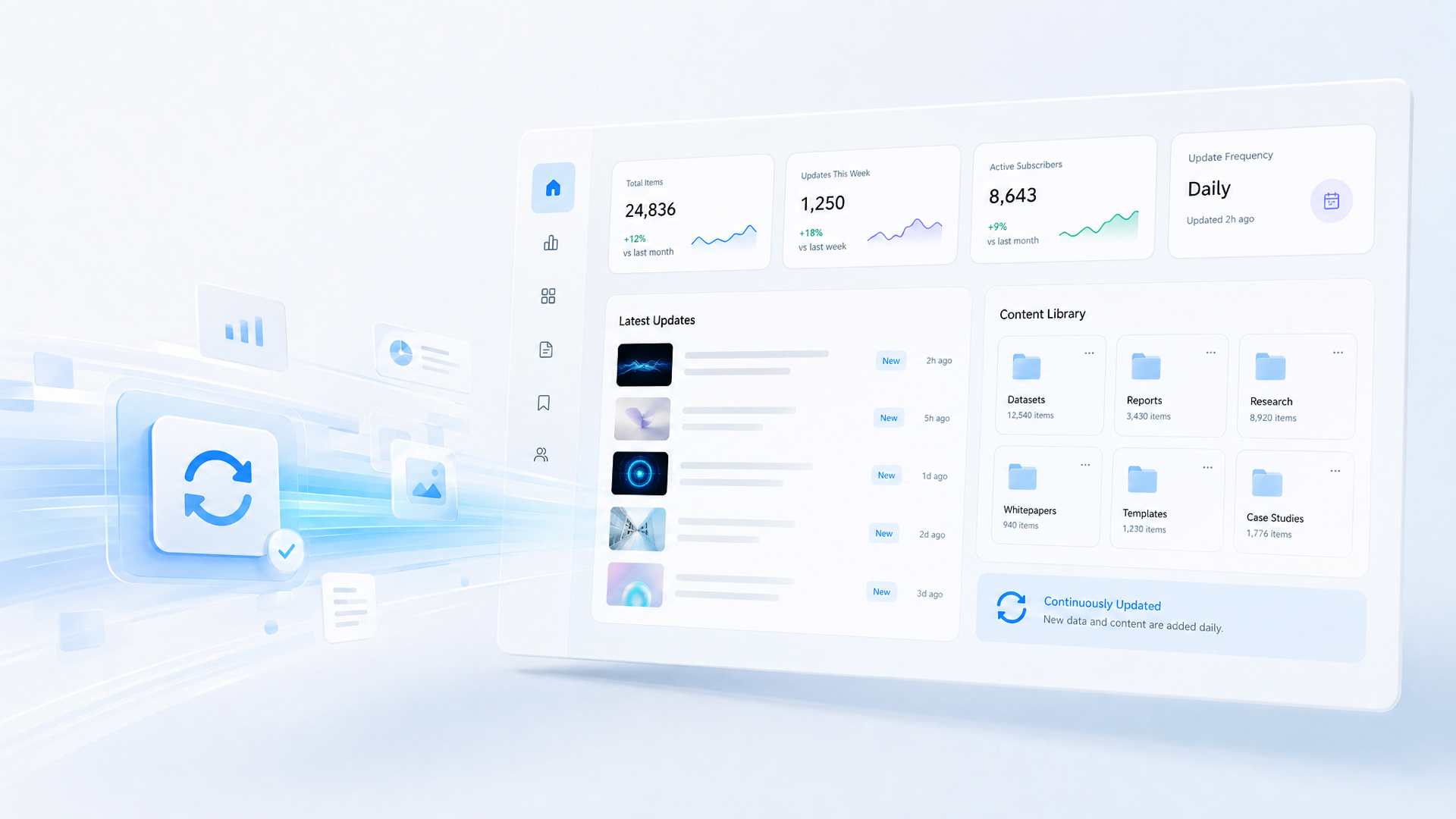
If physical ecommerce is about managing "atoms" (shipping, inventory, and supply chain headaches), then digital assets are about managing "bits." And bits are a whole lot easier to scale.
The most overlooked model in 2026 is the Subscription-Based Digital Asset. This is the holy grail of business: predictable, recurring revenue with near-zero marginal cost. According to the Zuora Subscription Economy Index, subscription businesses have grown over 3.5 times faster than traditional companies over the last decade.
The AI Edge:
AI has completely changed the cost structure of digital assets. What used to take a research team months to compile can now be curated and updated in hours. We’re talking about:
- Private Communities: High-signal networks for specific niches (e.g., "AI-native Amazon FBA sellers").
- Niche Data Dashboards: For example, a paid database of "Weekly Winning Ad Hooks" updated by AI research tools.
- Template Packs: Business-in-a-box toolkits that stay updated with the latest software shifts.
The beauty of this model is that you aren't starting every month at zero. You’re building a revenue floor that compounds, rather than a sales ceiling you have to hit every single day.
How to Choose Your Lane
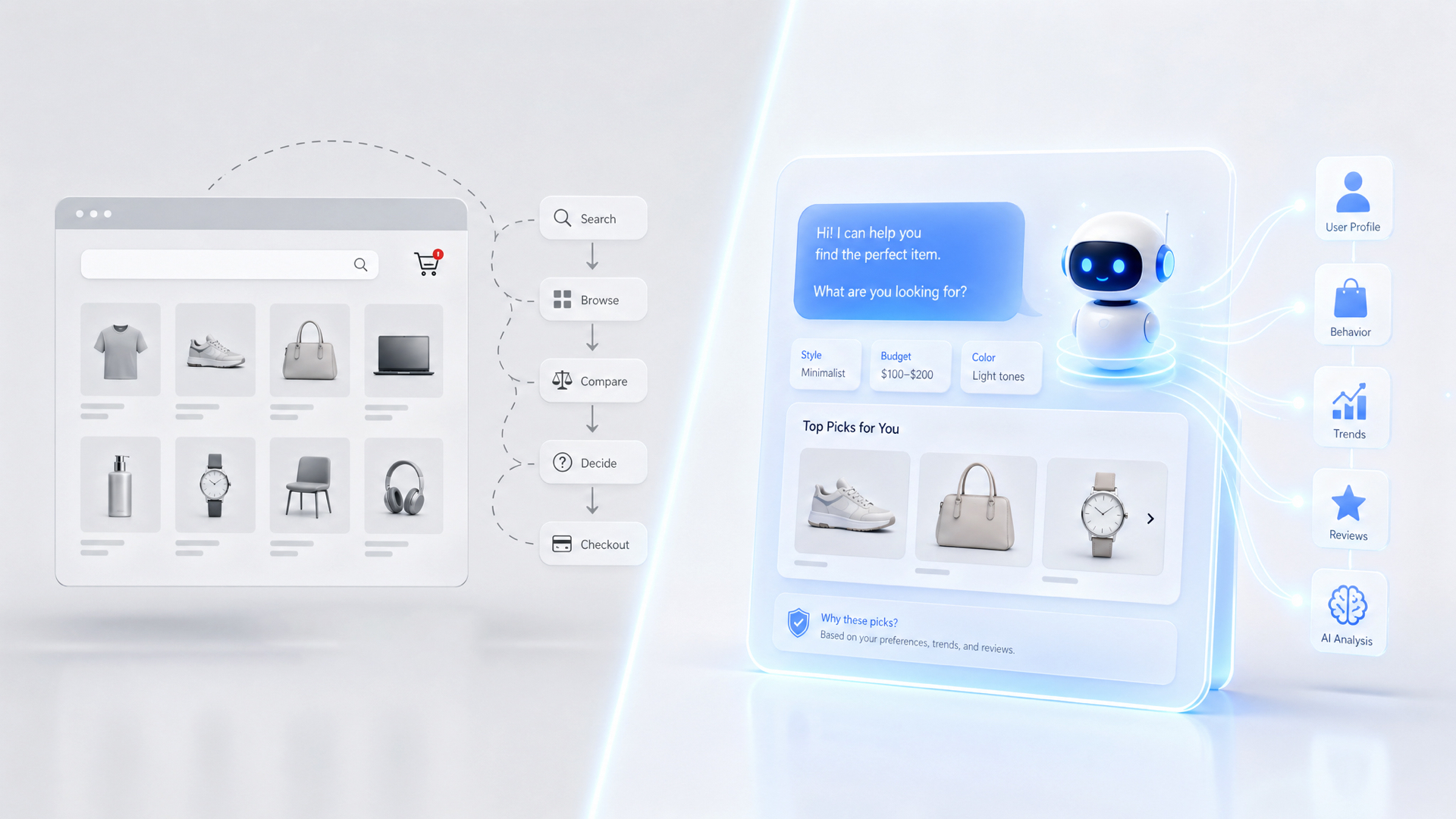
The worst thing you can do is try to do all three. Choose the model that aligns with your natural Leverage Points.
- The AI Micro-Agency is for the "Builders." If you enjoy mastering new tools and solving specific technical problems, this is your fastest path to cash flow.
- Creator-Led Commerce is for the "Storytellers." If you’re comfortable creating content and want to build a long-term brand that compounds, this is your play.
- Subscription Assets is for the "Architects." If you prefer stability, high margins, and building systems that run while you sleep, go deep here.
The Role of Execution
No matter which path you choose, the biggest bottleneck in 2026 is execution speed. In a world where AI can build a landing page in seconds, "perfectionism" is just another word for "procrastination."
This is where AI-native platforms like Genstore change the game. The goal isn't just to "have a store"; it's to have a store that is fed by real-time data and optimized by AI from day one. Whether you’re a solo creator or an agency building for clients, you need a workflow that handles the friction so you can focus on the strategy.
Final Take: The Future belongs to the Lean
If there’s one thing to take away from the state of ecommerce in 2026, it’s this: Complexity is a liability. Systems are a superpower.
The days of the 50-person ecommerce company are being challenged by the 2-person "unicorn" team using AI to manage millions in revenue. The opportunity is still massive, but it requires a mindset shift from "hustling" to "architecting."
Stop looking for shortcuts and start building leverage. The tools are here, the data is clear, and the market is waiting.
Where are you going to start?