
The Execution Gap: Why Most Founders Fail Before They Launch
In the current ecommerce landscape, you don’t have a product problem—you have an execution problem.
Most founders are trapped in a cycle of "perpetual preparation." They spend weeks scrolling TikTok for winning products, analyzing Amazon reviews, and meticulously tweaking Shopify themes. By the time the "Launch" button is finally pressed, the market has already moved on.
The result? No traffic, no data, and zero revenue.

The Market is Moving at Warp Speed
The way consumers discover products has fundamentally shifted. According to Adobe Analytics, retail traffic driven by generative AI has skyrocketed by over 1,200%. Some datasets even indicate a staggering 4,700% year-over-year surge in AI-driven shopping behavior.
In 2026, speed is your only sustainable competitive advantage. During the last holiday season, AI-influenced retail traffic jumped nearly 700%, proving that if you aren't visible where AI is searching, you don't exist.
The Real Constraint: You Are Testing Too Slowly

Ecommerce success is a numbers game. It’s no longer about building one "perfect" store; it’s about the volume of high-quality experiments you can run.
If it takes you two weeks to launch one store, you’re running a single experiment. If it takes you 10 minutes, you can run dozens. This is the leverage gap that separates six-figure side hustles from million-dollar brands.
Why the Traditional Workflow is Broken
Even with modern SaaS tools, your workflow is likely fragmented. You’re the "human glue" stitching together:
- Product Research: Manual browsing and data scraping.
- Design: Endless hours in Canva or Figma.
- Copywriting: Fighting with ChatGPT prompts to get the "voice" right.
- UX: Most DIY stores still suffer from mediocre user experience, leading to dismal conversion rates.
You aren't just slow—you’re likely building something that won't convert anyway.
Enter the Era of AI Agents: From Tools to Autonomy
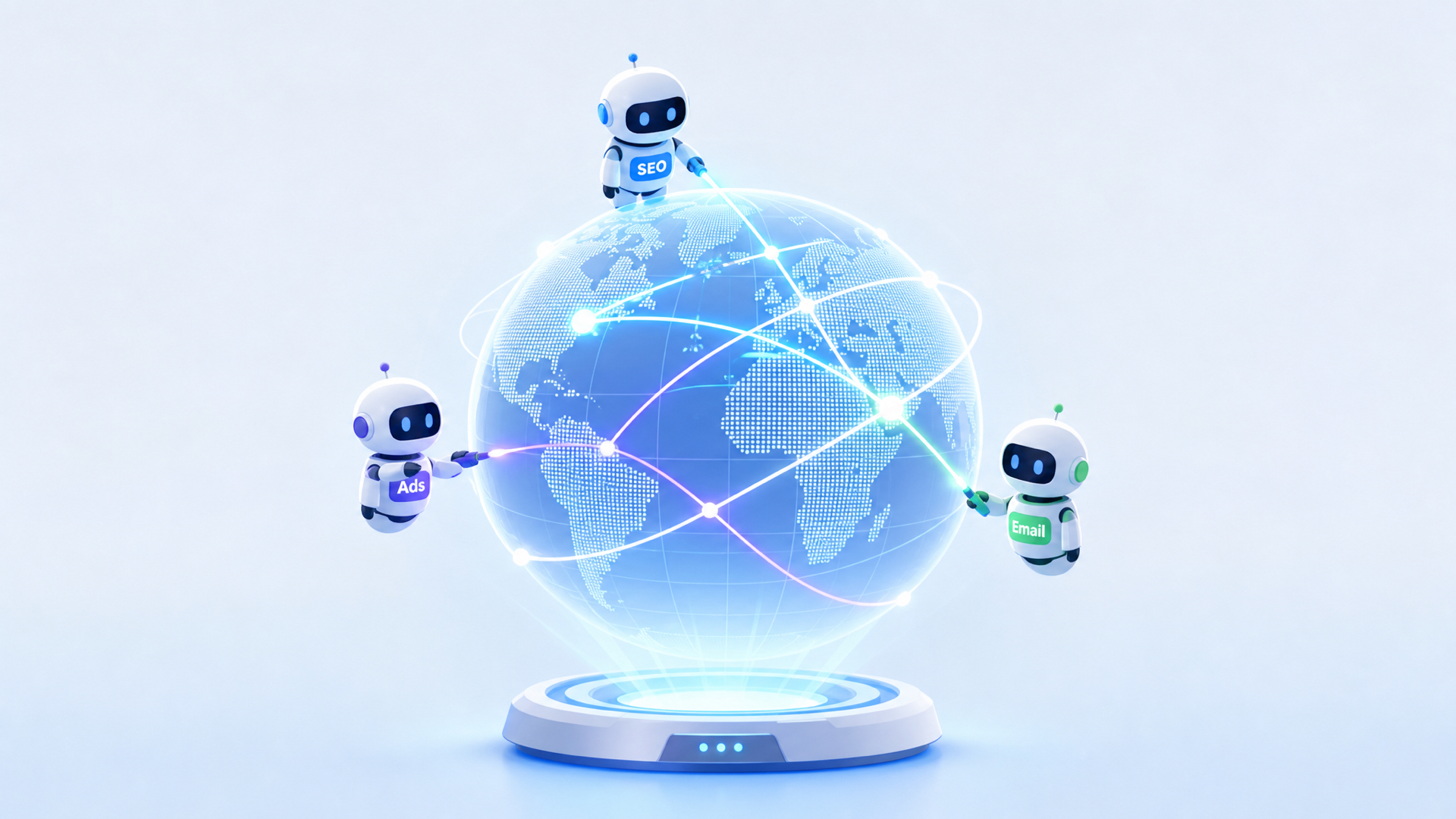
The shift from 2025 to 2026 is the transition from AI tools (which help you work) to AI agents (which do the work for you).
Instead of generating a product description and manually pasting it into a CMS, AI agents execute the entire workflow. This is exactly why we built Genstore.
How Genstore Compresses 2 Weeks into 10 Minutes
Genstore was designed to remove every manual friction point between an idea and a live, high-converting storefront. Here’s how it redefines the autonomous ecommerce store experience:
1. Data-Driven Niche Discovery
Stop guessing. Genstore scans real-time signals across social commerce and search platforms to identify niche product research AI opportunities. It finds the "gaps" where demand exists but competition is thin.
2. Pattern-Based Storefront Generation
We don't just build pages; we reconstruct proven conversion structures. Genstore applies the visual hierarchy and offer positioning used by top 1% brands, ensuring your store doesn't just look good—it sells.
3. Content That Mirrors Modern Behavior
AI ecommerce automation isn't just about speed; it's about relevance. Modern shoppers—especially those coming from AI search engines—are more engaged and browse more deeply. Genstore generates:
- Benefit-driven copy that speaks to the "outcome," not just the features.
- Ad-ready hooks tailored to current viral trends.
4. Frictionless Launch
The "Ready-Aim-Fire" approach is dead. We prioritize "Fire-Aim-Adjust." Genstore removes the final technical barriers so you can go live instantly.
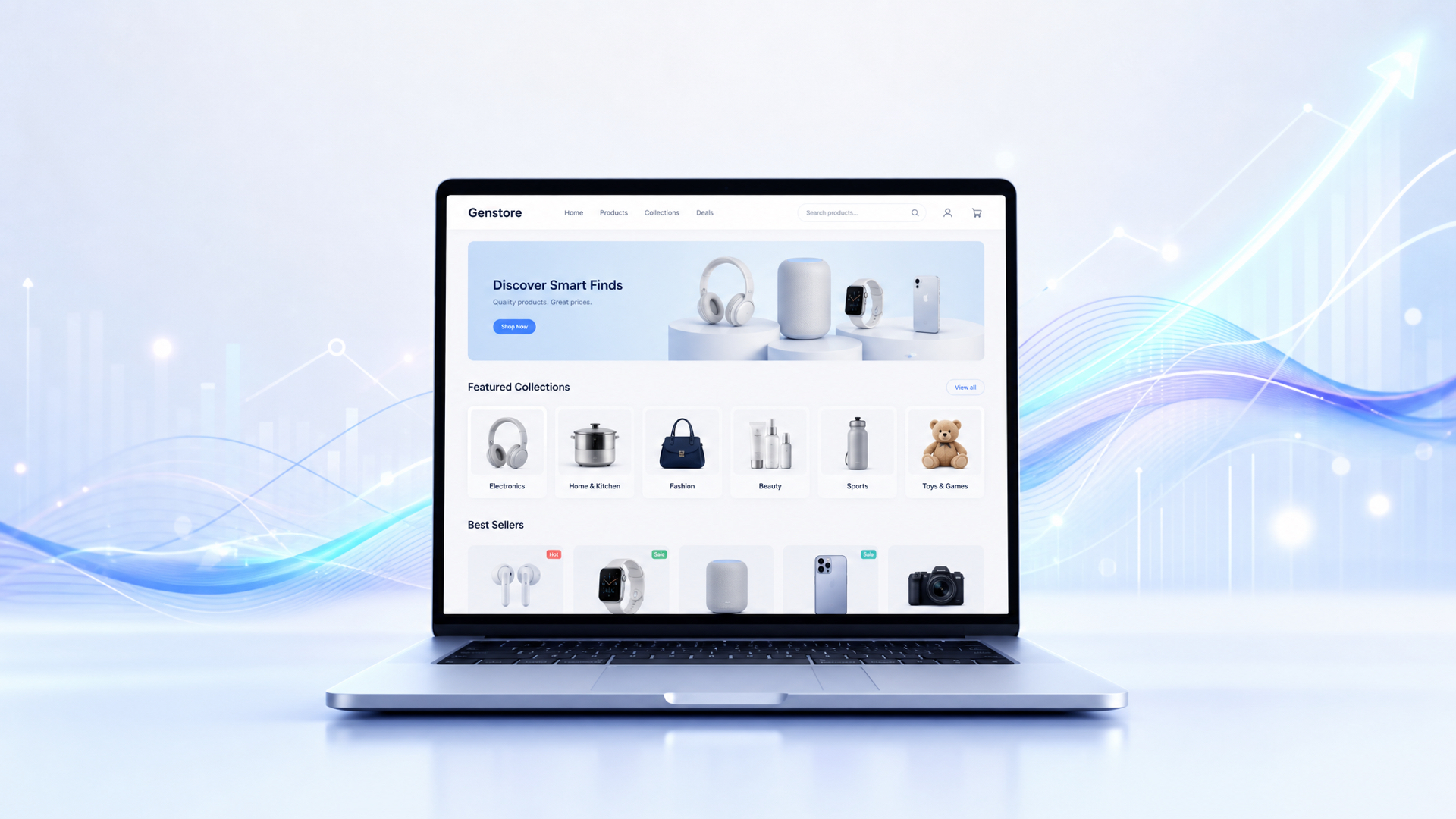
Case Study: Rebuilding a Million-Dollar Niche
Example: The Travel Pet Accessories Niche
The Bottom Line
Whether you are a beginner looking for your first win, a micro-influencer monetizing your audience, or a pro-seller scaling a portfolio, the game remains the same: The faster you launch, the faster you learn. The faster you learn, the faster you scale.
In 2026, the biggest disruption in ecommerce isn't better ads—it's the collapse of execution time.
Stop building. Start launching.