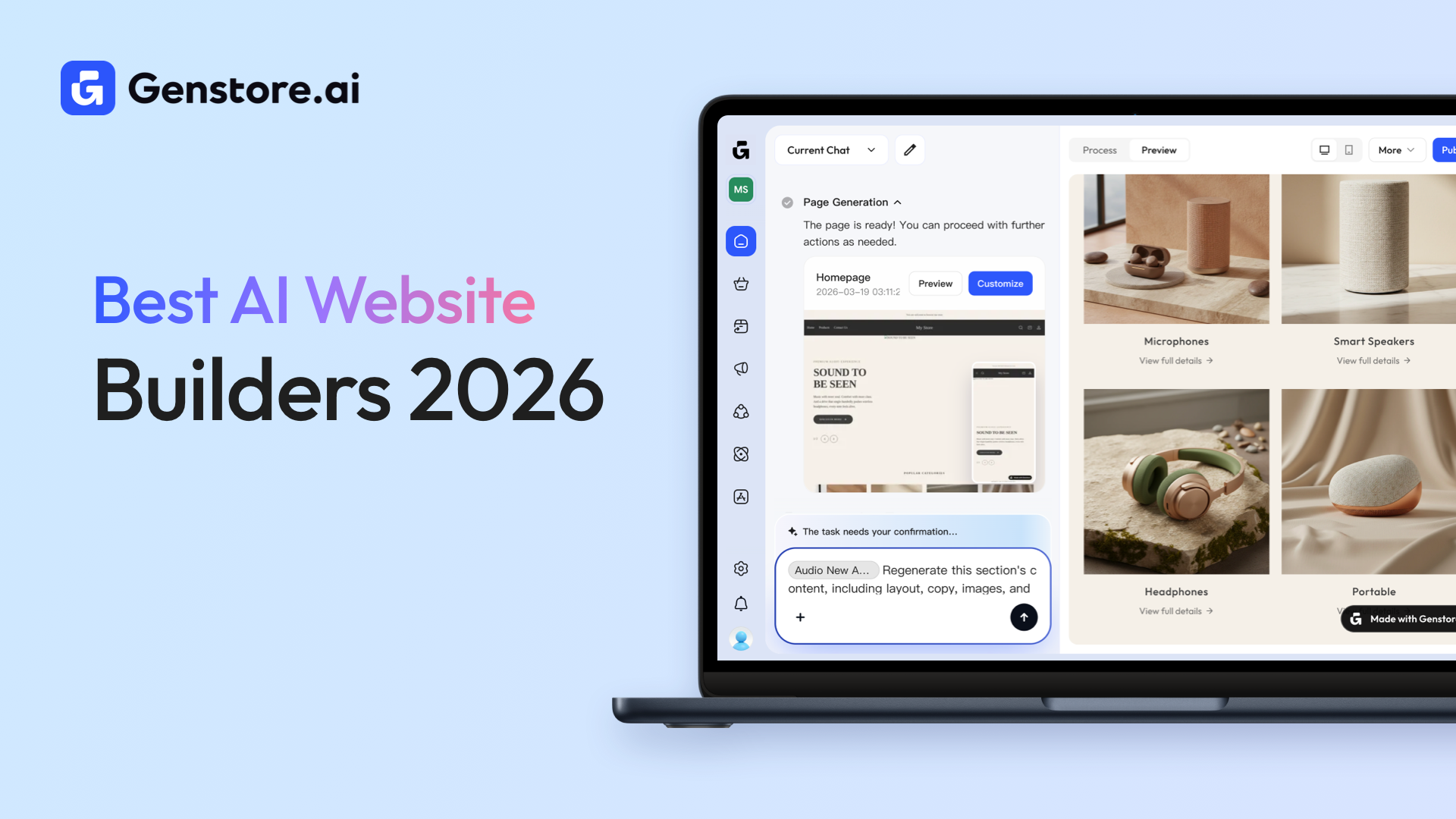
If you are searching for the best AI website builder in 2026, you are not alone. More founders, dropshippers, and creators are turning to AI to launch websites faster without dealing with complex setup.
But here is the real problem.
Most tools labeled as an AI website builder still require manual work. You might get a design, but not a working business. You might get a layout, but not real ecommerce functionality.
This guide breaks down the best AI website builders, including options for beginners, budget users, and ecommerce sellers. The goal is simple. Help you choose a tool that actually gets you live and selling.
Wix
Wix remains one of the most popular choices when people search for the best AI website builder. It combines ease of use with solid AI features.
The platform asks a few questions and generates a full site with design, images, and content. It is a good starting point if you want something quick without a learning curve.
However, it is not a dedicated AI ecommerce website builder, so selling features are more limited compared to ecommerce focused platforms.
Pros
• Beginner friendly setup
• Strong AI content and layout generation
• Large ecosystem of templatesCons
• Can become cluttered as you scale
• Ecommerce features are not the strongest
Hostinger
Hostinger is often mentioned when users look for the best free AI website builder or low cost options.
It offers a simple website AI builder with hosting included, making it easy to launch quickly. You can generate a basic site with AI and get it online with minimal effort.
It works well for simple websites, but it is not designed for complex ecommerce operations.
Pros
• Very affordable
• Fast setup with hosting included
• Simple interfaceCons
• Limited scalability
• Not ideal as an AI ecommerce website builder
Shopify
Shopify continues to evolve its AI features, especially for product pages and content. While it is not a fully AI native platform, it is still one of the strongest tools for ecommerce.
If your focus is selling, this is where Shopify stands out. It provides everything needed to run an online store, even if some setup is still manual.
Pros
• Strong ecommerce infrastructure
• Reliable checkout and payments
• AI tools for product contentCons
• Not fully automated as an AI website builder
• Higher cost compared to simpler tools
10Web
When people search for “10web AI website builder,” they are usually looking for a mix of AI and WordPress flexibility.
10Web generates full WordPress websites using AI and even allows you to recreate existing sites. This gives you more control, but also adds complexity.
Pros
• Combines AI with WordPress
• Flexible and customizable
• Can recreate existing websitesCons
• Not beginner friendly
• Requires some technical knowledge
Framer
Framer is often included in lists of the best AI website builder 2026 options because of its design quality.
It produces modern, clean websites that look polished right away. It is ideal for landing pages or branding focused projects.
However, it is not built as an AI ecommerce website builder, so product selling features are limited.
Pros
• High quality design output
• Smooth editing experience
• Great for brandingCons
• Limited ecommerce functionality
• Not suitable for product heavy stores
Durable
Durable focuses on speed. It is one of the fastest tools in the website AI builder category.
You can generate a simple website in seconds, which makes it useful for testing ideas or launching quick projects.
Pros
• Extremely fast setup
• Easy to use
• Good for quick validationCons
• Limited customization
• Not built for scaling
Genstore AI
Genstore approaches the concept of an AI ecommerce website builder differently.
Instead of just generating a website, it builds a ready to sell store. This includes product selection, store structure, and product pages created by AI.
For dropshipping sellers or beginners, this removes a lot of the usual friction. You are not just building a site. You are starting closer to a working business.
Pros
• Designed specifically for ecommerce
• Automates product sourcing and setup
• Faster path to a live storeCons
• Less design flexibility
• Still growing compared to older platforms
Final thoughts
The definition of the best AI website builder in 2026 is no longer about who generates the best looking site.
If your goal is to test ideas quickly, launch a dropshipping store, or start selling without getting stuck in setup, using an AI ecommerce website builder that handles more than just design will save you time and reduce risk.
If you want to see what that looks like in practice, try building your first store with Genstore and experience how fast you can go from zero to selling.